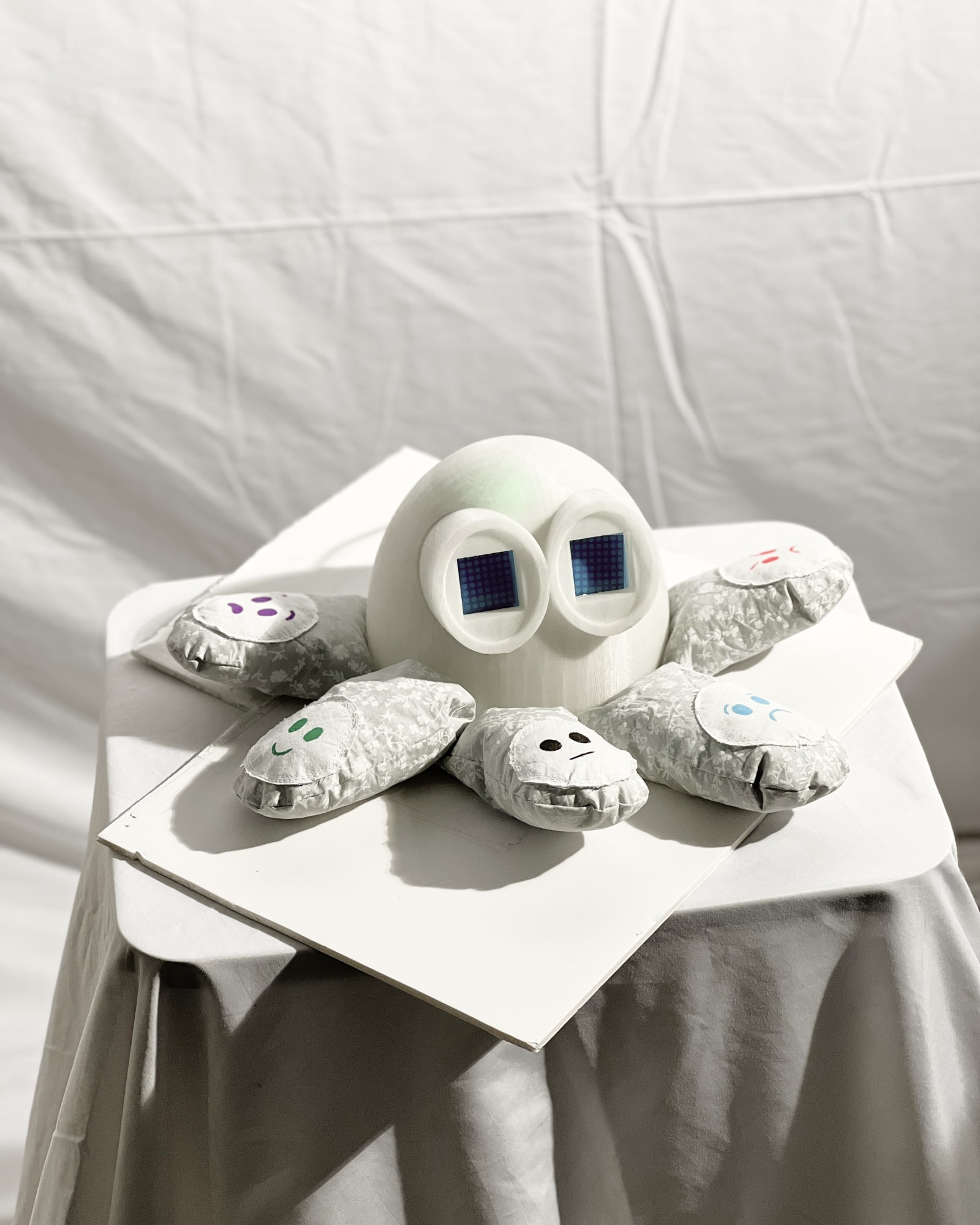
PILOE is a connected object designed to help autistic children express emotions in a simple, non-verbal way, while supporting parents in understanding their child’s needs.
Children with ASD may struggle to express emotions verbally, and parents often lack clear, structured signals to understand what their child is experiencing.
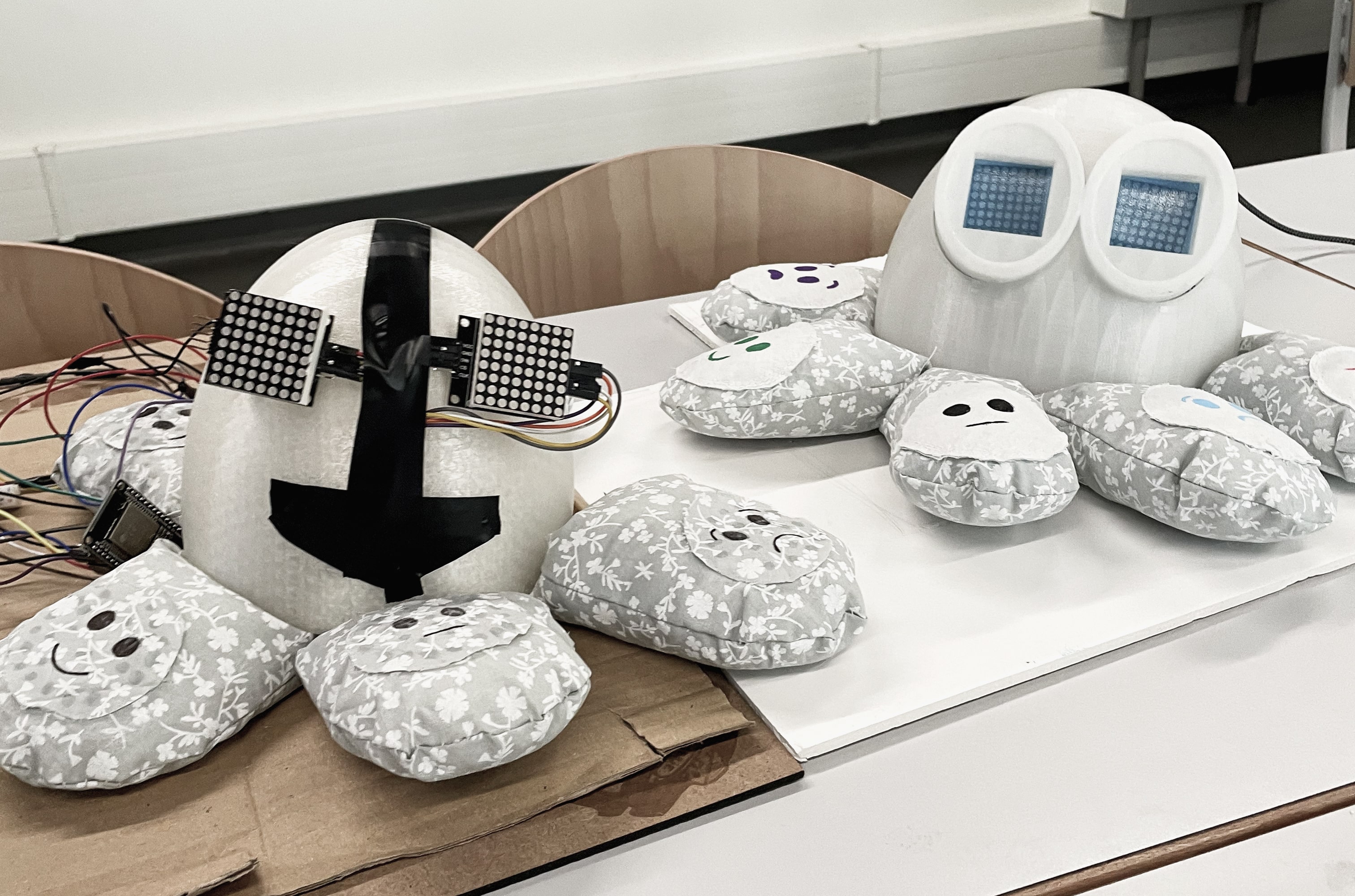
We designed a soft octopus-shaped object, where each tentacle represents an emotion. Through touch and light feedback, children can express how they feel in a natural and sensory way. Two functional prototypes were built and iterated on, improving ergonomics, stability, and reliability.
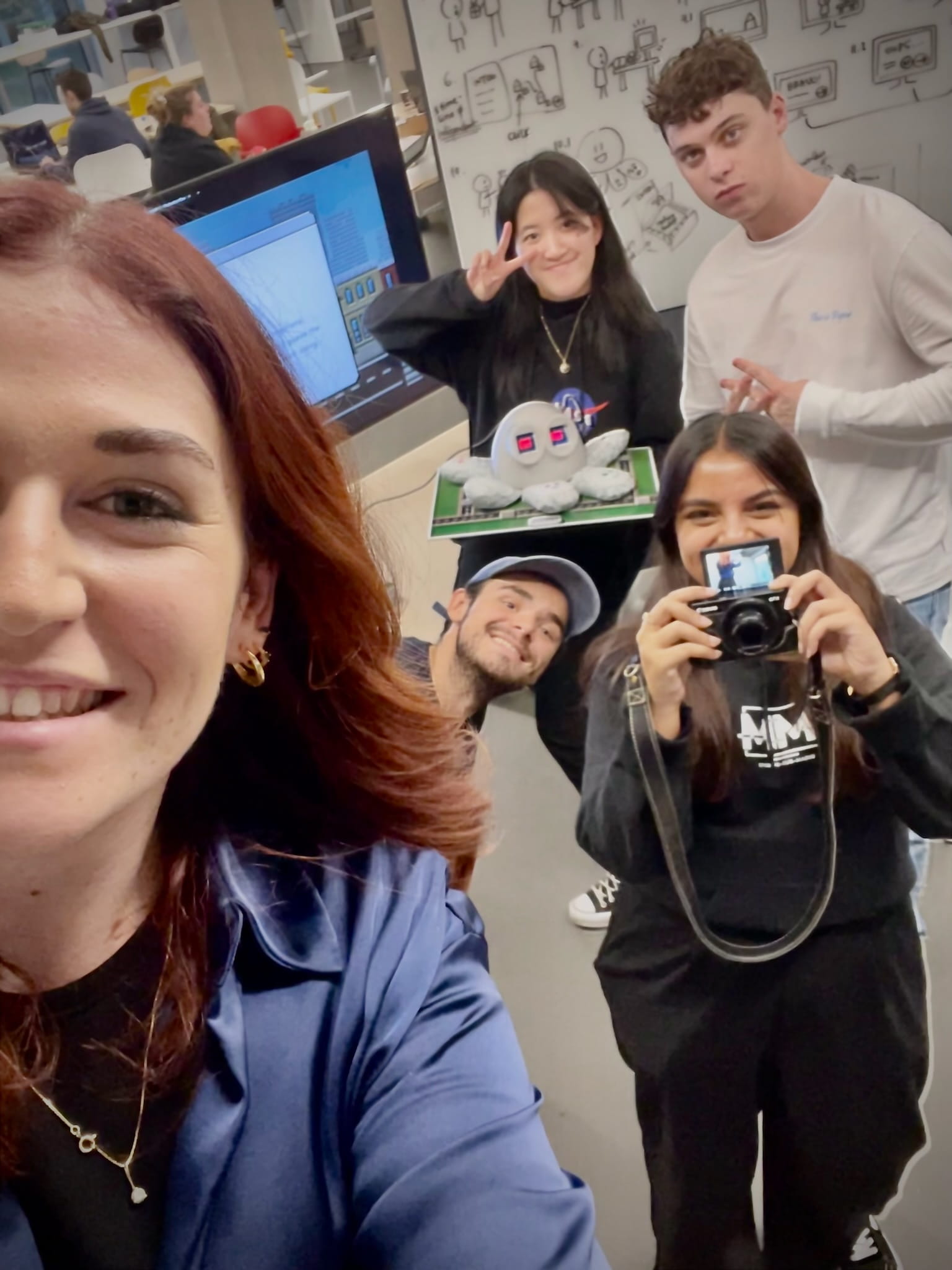
I contributed to research, ideation, interaction design, and prototyping. The project was presented to a jury, received very positive feedback, and is currently showcased during school open days as an example of meaningful product and connected object design.
During my first year in the Master’s program in Interactivity and UX Design at IIM Digital School, we were challenged to imagine an innovative solution that could make a real difference in the life of a person with a disability.
Touched by the daily challenges faced by children with Autism Spectrum Disorder (ASD) and their families, my team and I decided to focus our project on emotional communication, creating a tool that could help children aged 6 to 10 express and share their emotions more easily.
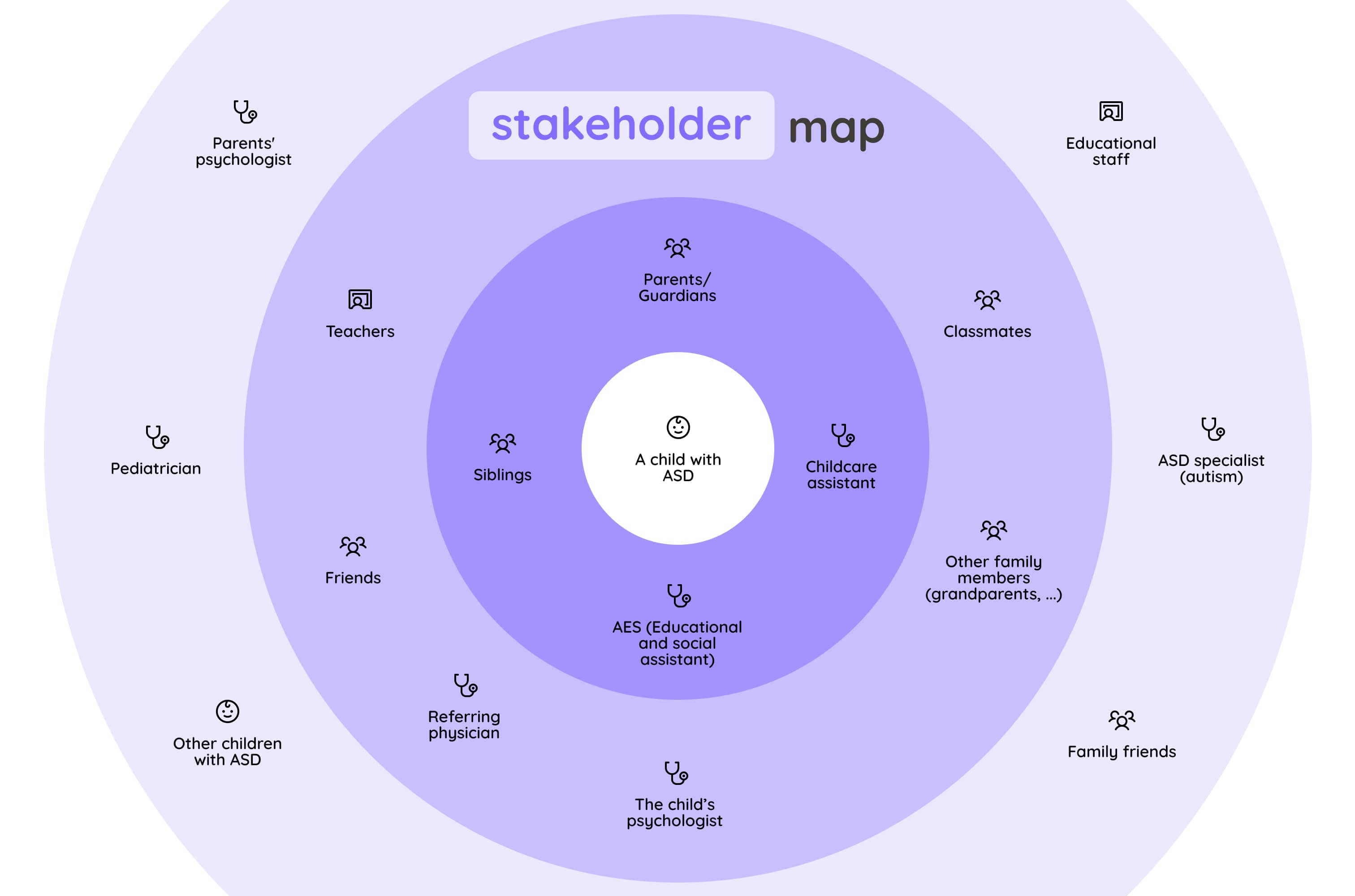
To better understand the challenges, we decided to speak directly with those who face them daily:
✅ 4 moms of autistic children, who shared their struggles, fears, and daily life.
✅ The president of an association and former school assistant, who offered insight into the school environment and her personal experience dealing with a child with ASD.
✅ Two nurses from an Autism Resource Center, who explained the current medical and therapeutic approaches.
ASD is a spectrum, and no single approach works for everyone. Some children are non-verbal for years, making communication especially difficult during moments of distress. Others have specific interests they obsess over.
→ For parents, this means constantly adapting, learning, and sometimes feeling powerless.
Because of prejudice and lack of awareness, some children are labeled as “not normal”, “weird” or “too different”.
They face isolation at school, struggle to make friends, and are hurt by comments from peers or even adults around them.
Sometimes, they also tend to isolate themselves in “their own world” or virtual worlds like video games.
To bring structure and comfort, many families design their own systems, from visual signals to express emotions, to routines for daily activities like homework, baths, or outings
These routines become a way to keep life predictable and safe for their children.
They ofter rely on regular support from associations or public organizations to receive psychological, educational, or medical care for their child : Pediatricians, speech therapists, AESH (special needs assistants), child psychiatrists,…
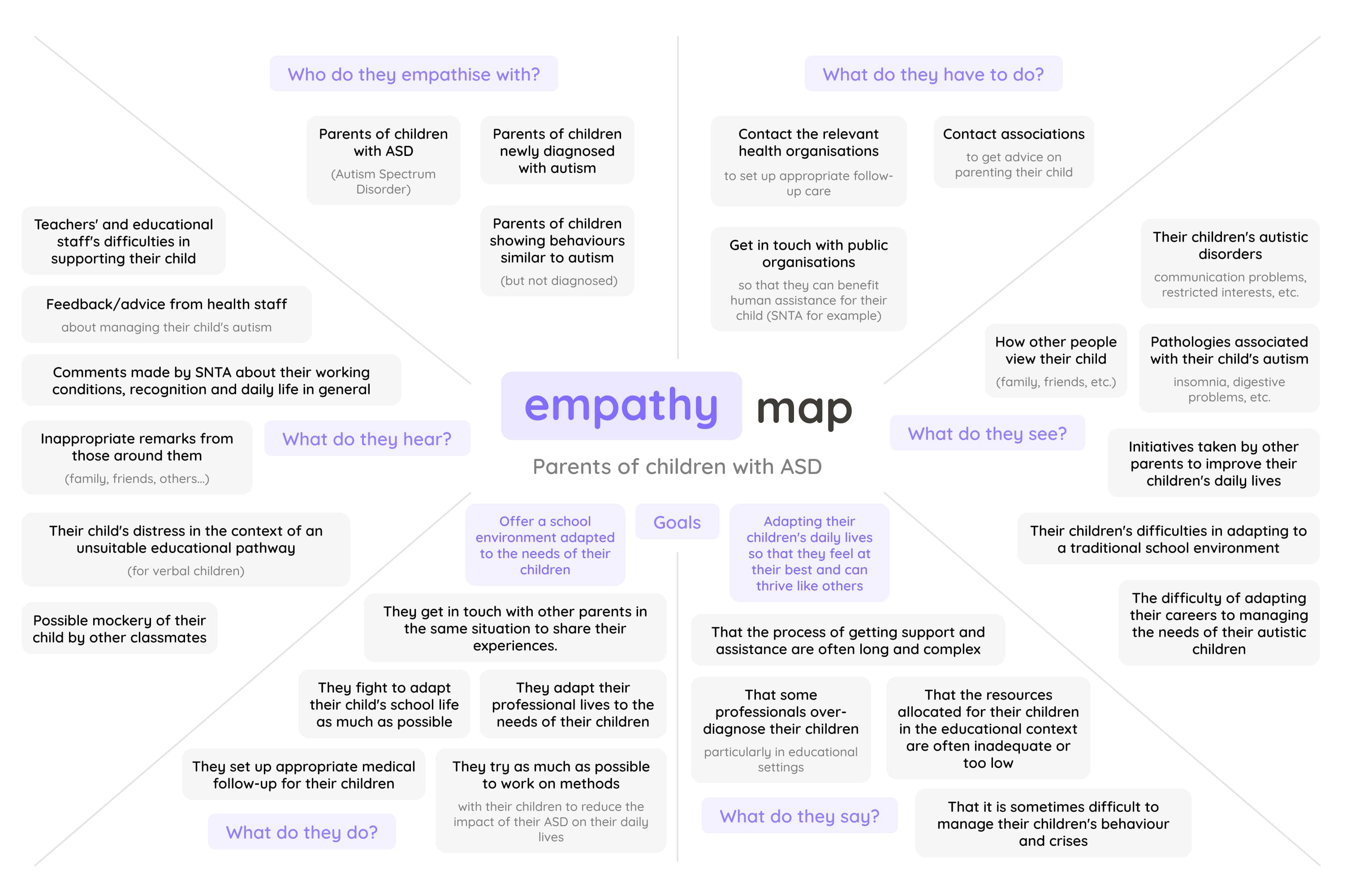
Children with autism often struggle to recognize, express, and communicate their emotions, which can increase their stress levels and affect their daily lives and social integration (school, community, social interactions).
This challenge also creates a heavy mental load for caregivers, who often lack clear tools to understand and support their children effectively. Existing solutions are often too generic or fragmented, making it difficult to meet the diverse needs of autistic children and their families.


After listening to parents, specialists, and children’s experiences, one thing became clear: what they needed wasn’t just another digital tool, it was emotional support, comfort, and connection.
Our research highlighted two essential aspects: children needed a simple, non-verbal way to express their emotions, while caregivers needed clarity and understanding to support them better.
We wanted to bridge that gap, to create something that could speak both languages: the emotional world of the child and the rational, caring perspective of the parent.
That’s how we began imagining a solution that could be playful for children, helpful for parents, and above all, comforting for both.
Building on our insights, we aimed to design a solution that could:
We brainstormed different forms and interactions before falling in love with the idea of an octopus-shaped companion : a soft, tactile object where each tentacle represents a different emotion, offering both emotional expression and sensory comfort.
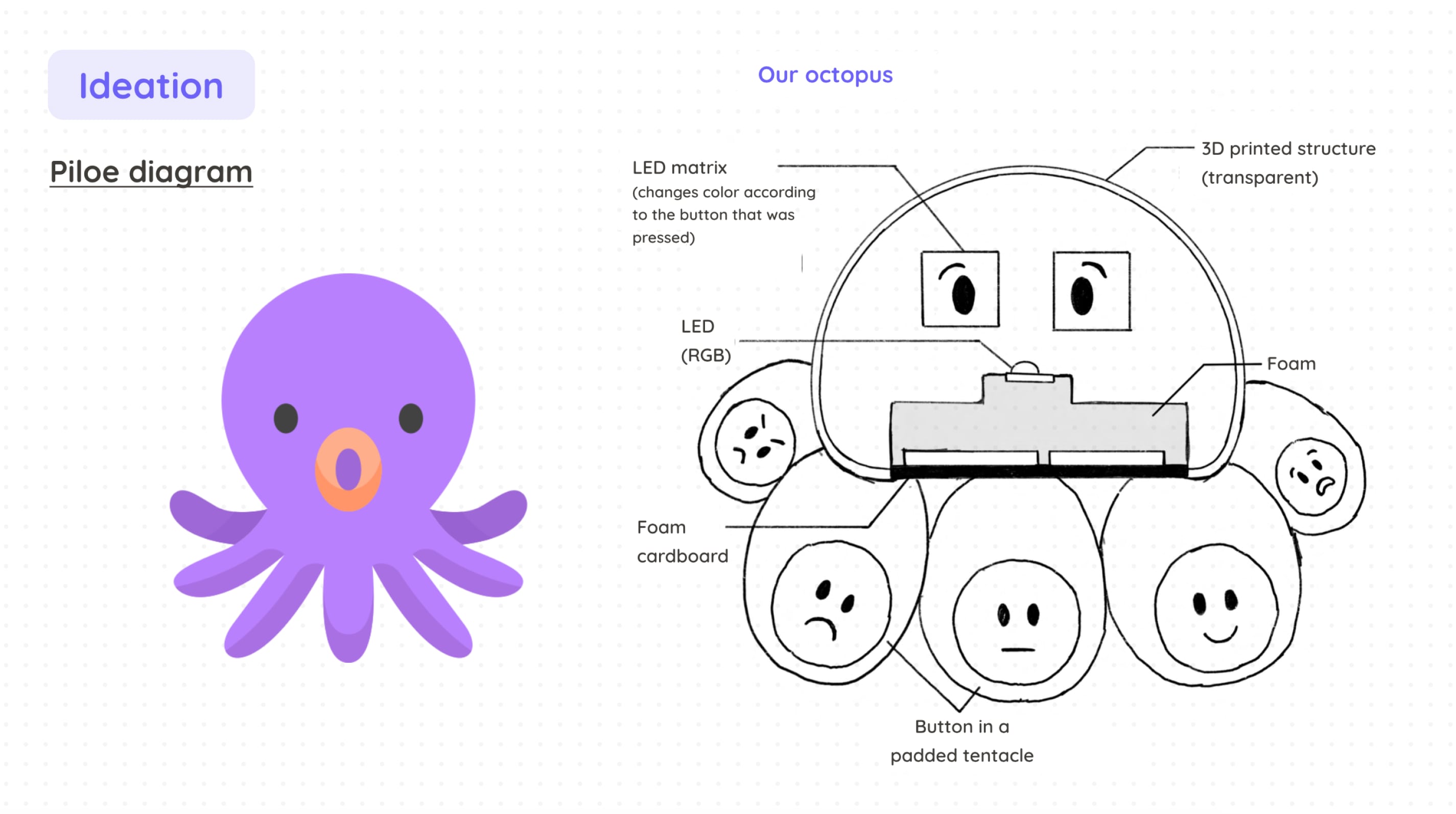
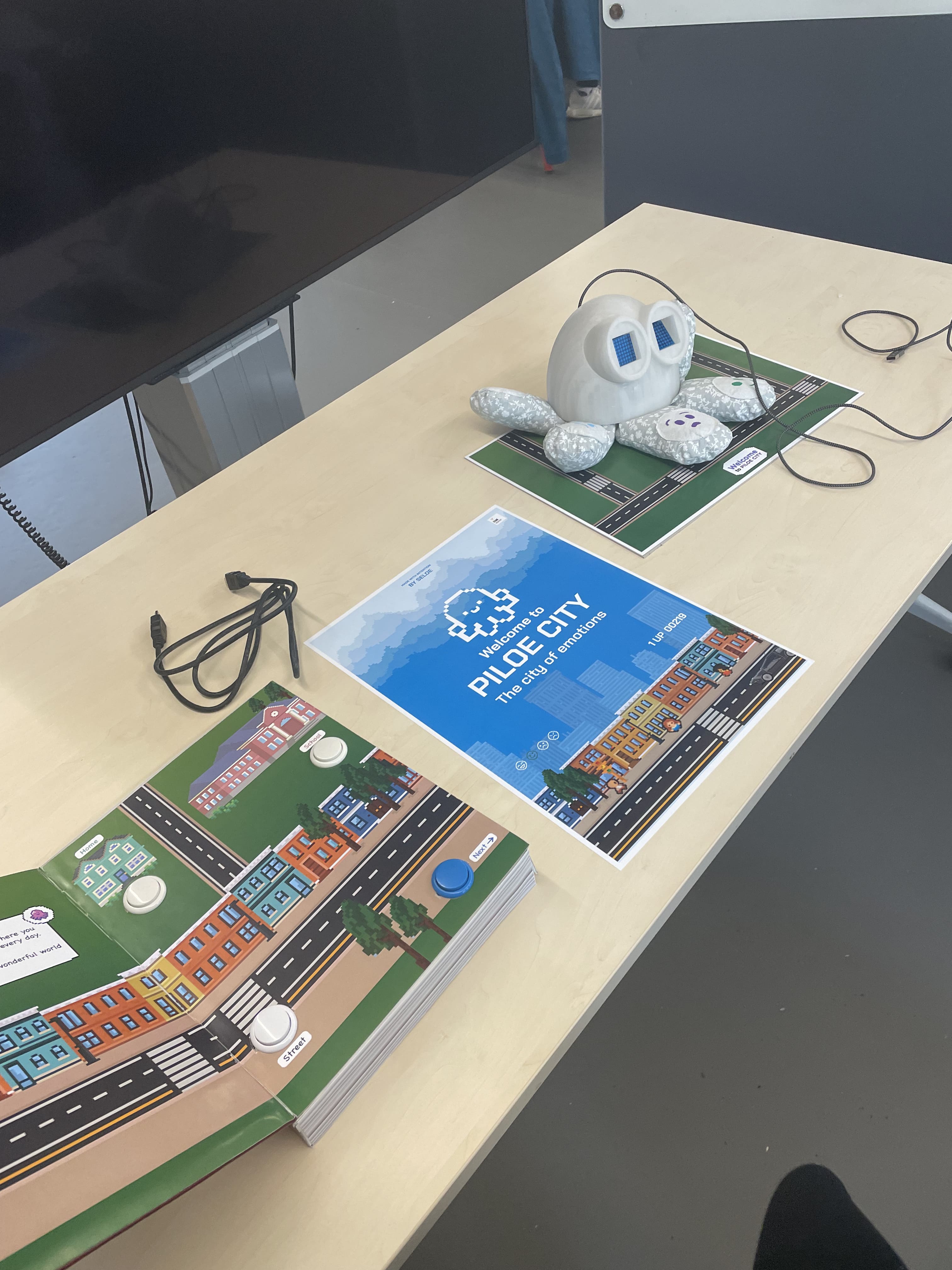
Once our concept started to take shape, it was time to make it real. We wanted to give life to the octopus, to turn a simple idea into something children could hold, touch, and trust. This is how PILOE was born: a connected emotional companion made of two key elements : a sensory toy and a smart system that connects emotions with data.
We designed PILOE as a soft octopus toy:
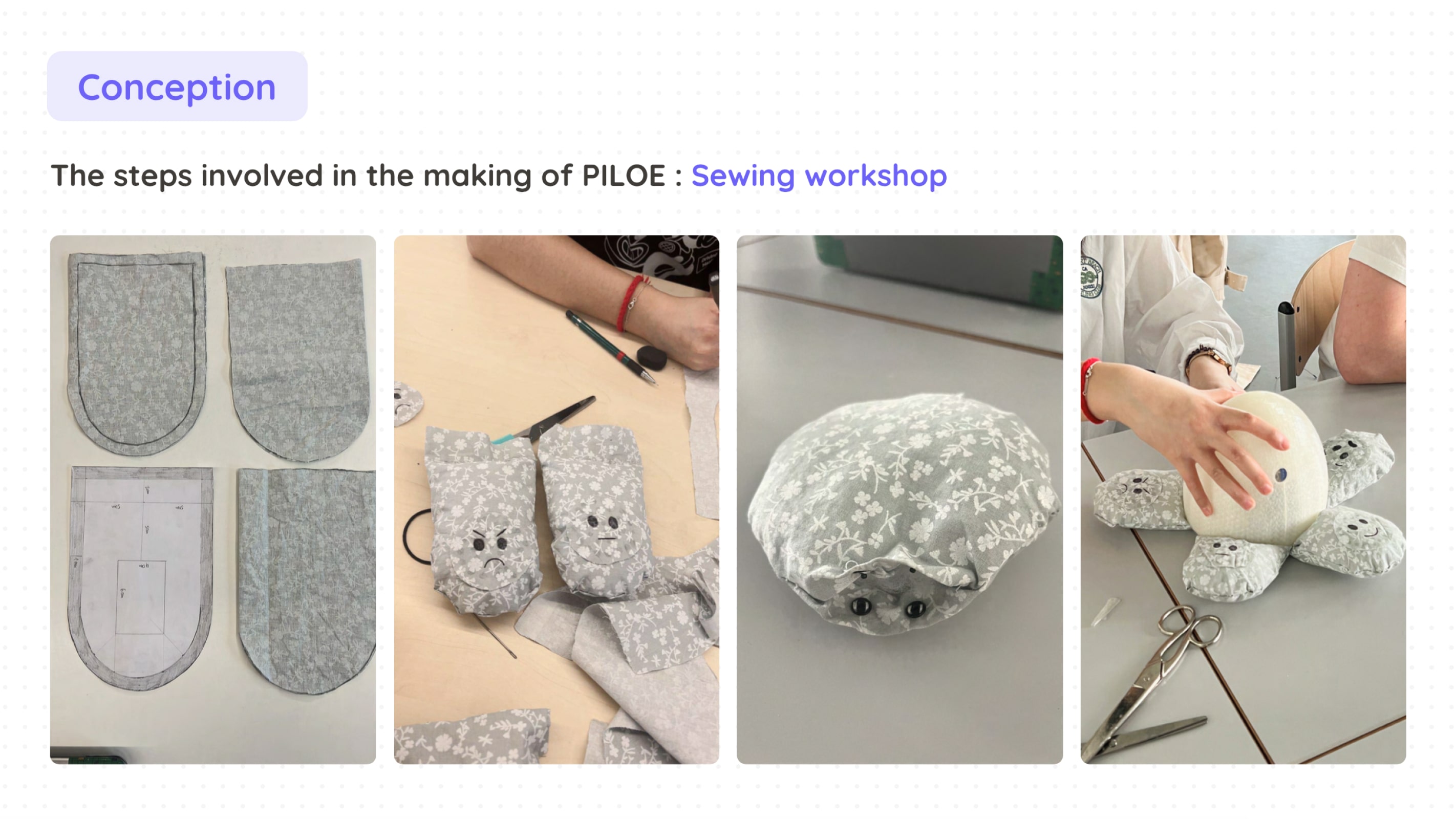
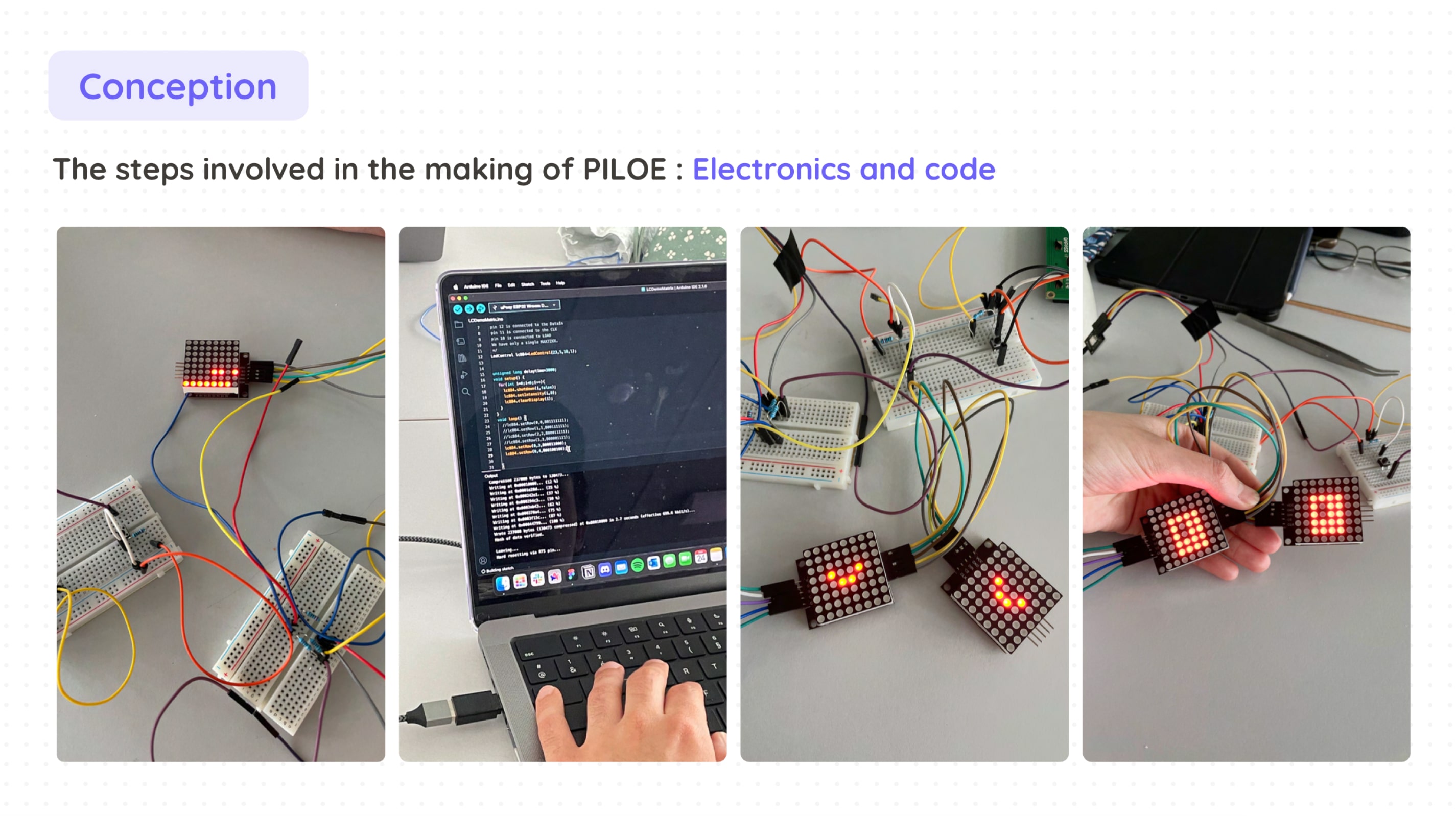
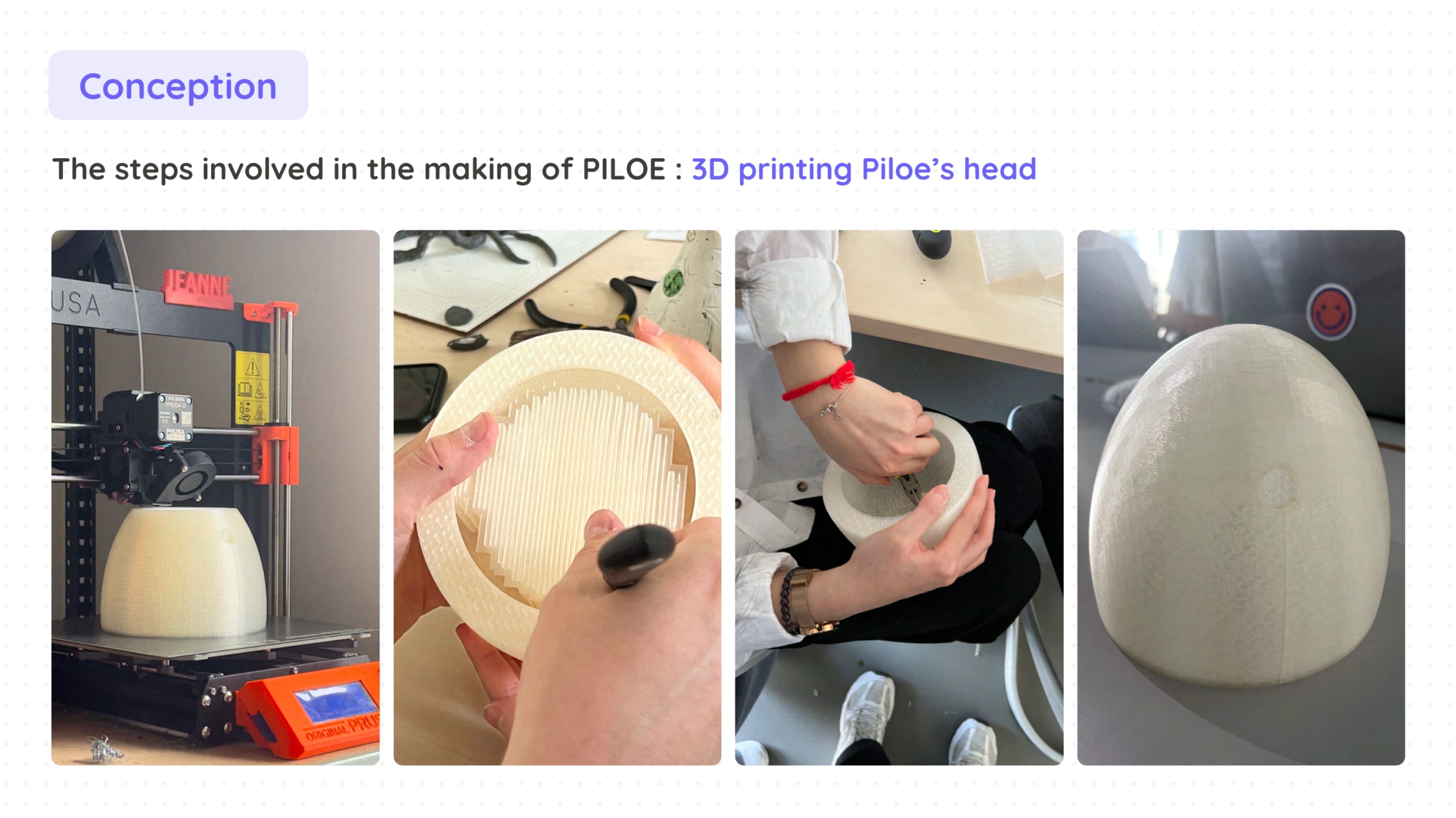
Through this, our goal was to create a comforting, playful object : one that feels more like a friend than a device.
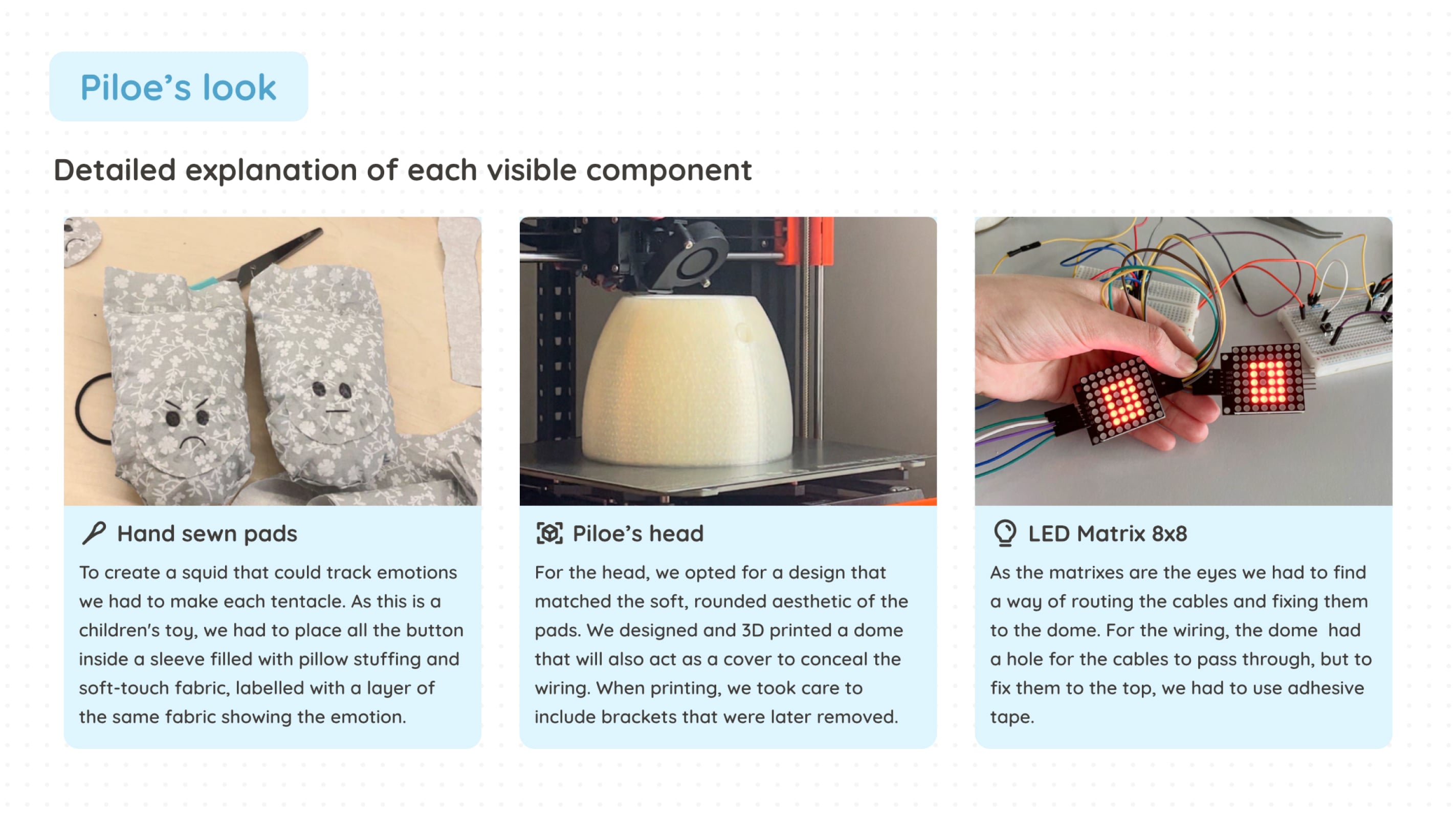

After the first round of prototype testing, we identified key areas for improvement:
With these learnings, we developed a second version of PILOE:
These iterations made PILOE more than a prototype, it became a truly interactive bridge between children and their caregivers, blending emotional design, playfulness, and empathy into one meaningful object.

By the end of the project, we had built not just one, but two functional versions of PILOE. Each prototype represented a step forward, more stable, more expressive, and more aligned with the needs we uncovered during our research.
Although the project ended before full deployment, we identified several next steps that could have driven the solution even further :
These steps would have allowed us to measure impact, uncover new insights, and continue shaping PILOE into a reliable daily companion.
Several areas of the prototype could also be improved or refined:
→ These improvements would have strengthened PILOE’s relevance, comfort, and emotional resonance.
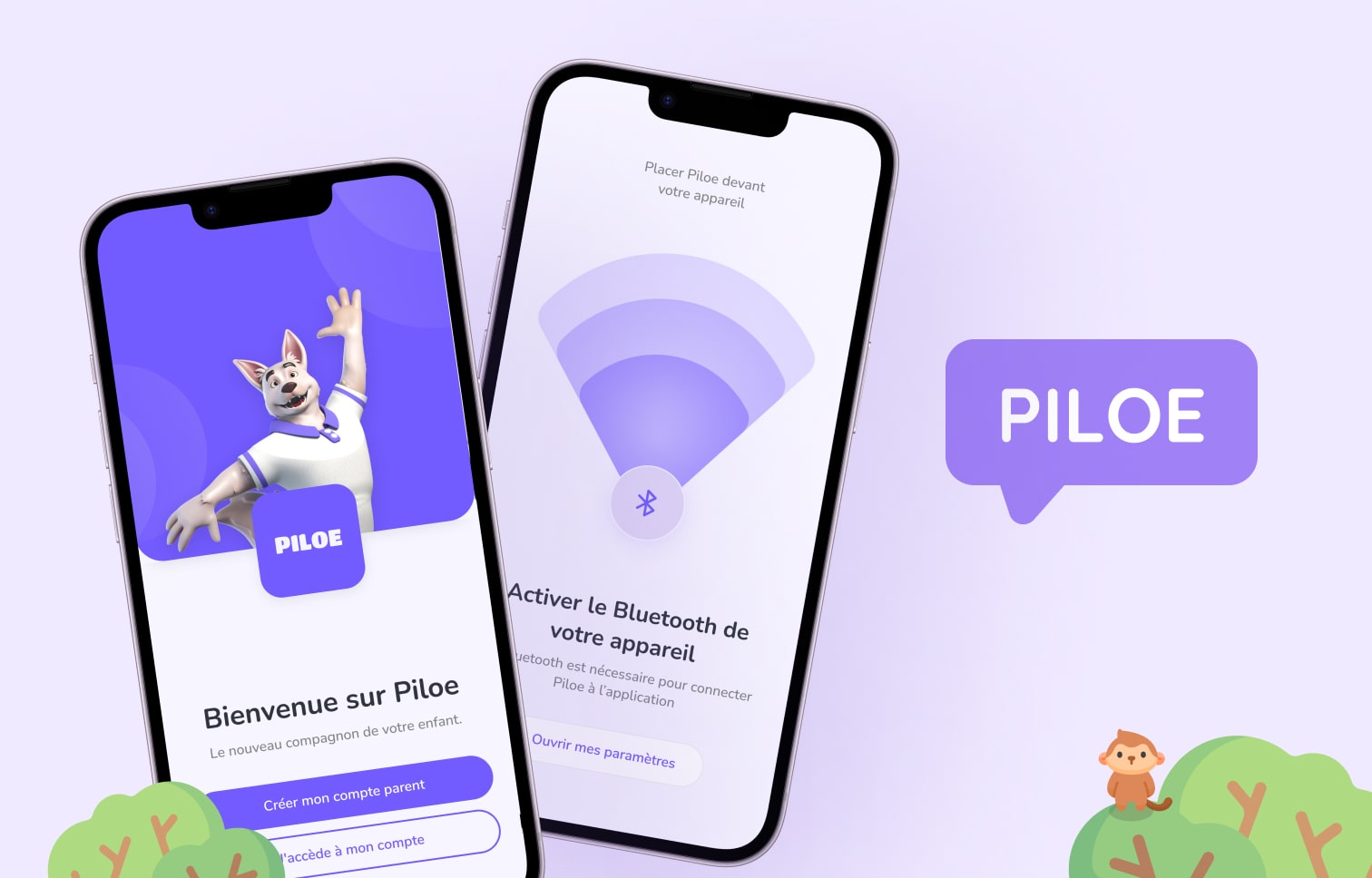
With a stable and functional prototype, we explored the second part of the product: a companion app for caregivers.
Where the physical toy helps children express, the app helps caregivers understand.
Our objective was to create a digital extension that translated tactile interactions into meaningful emotional insights.
Connected to the toy, the app would allow caregivers to:
This approach created a holistic ecosystem:
Together, they formed a more complete and supportive way to navigate emotional communication within families affected by autism.
Today, the project continues to live on: it is showcased during the school’s open house events , illustrating to future students that UX design extends far beyond screens.
It demonstrates how thoughtful design can merge physical interactions, connected technologies, and user-centered thinking to create solutions that truly make a difference.
As our work on PILOE progressed, we also wanted to explore how the connected object could inspire new emotional-learning experiences beyond the home environment.
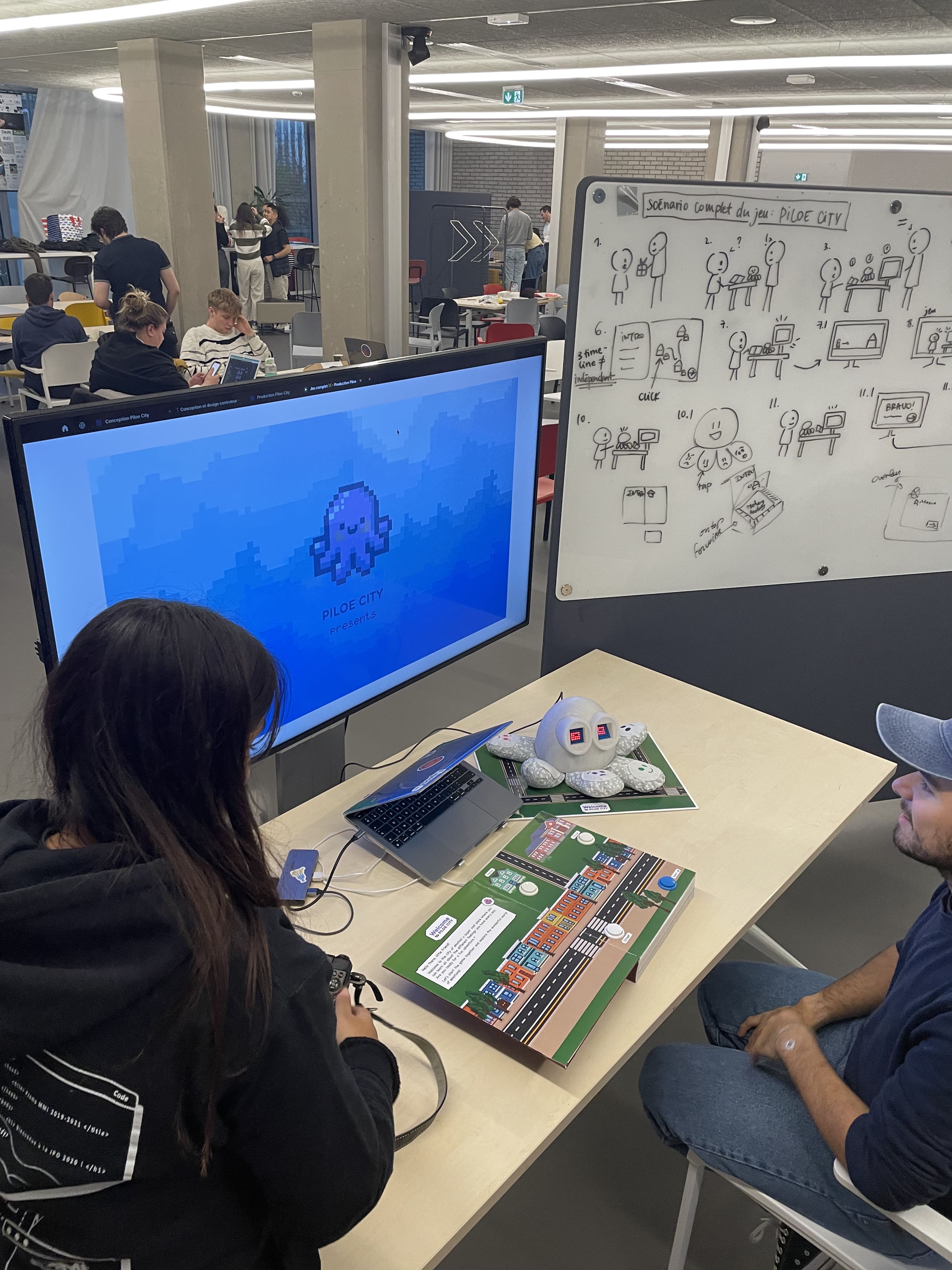
During a hackathon organized for the Alt Ctrl GDC, we prototyped a small educational game designed to help children identify emotions through everyday situations.
The concept was simple, playful, and aligned with our mission:
children were presented with short, familiar scenarios : going to school, losing a toy, meeting a new friend, and had to choose the emotion that matched the situation. The game aimed to reinforce emotional recognition through repetition, storytelling, and positive reinforcement.