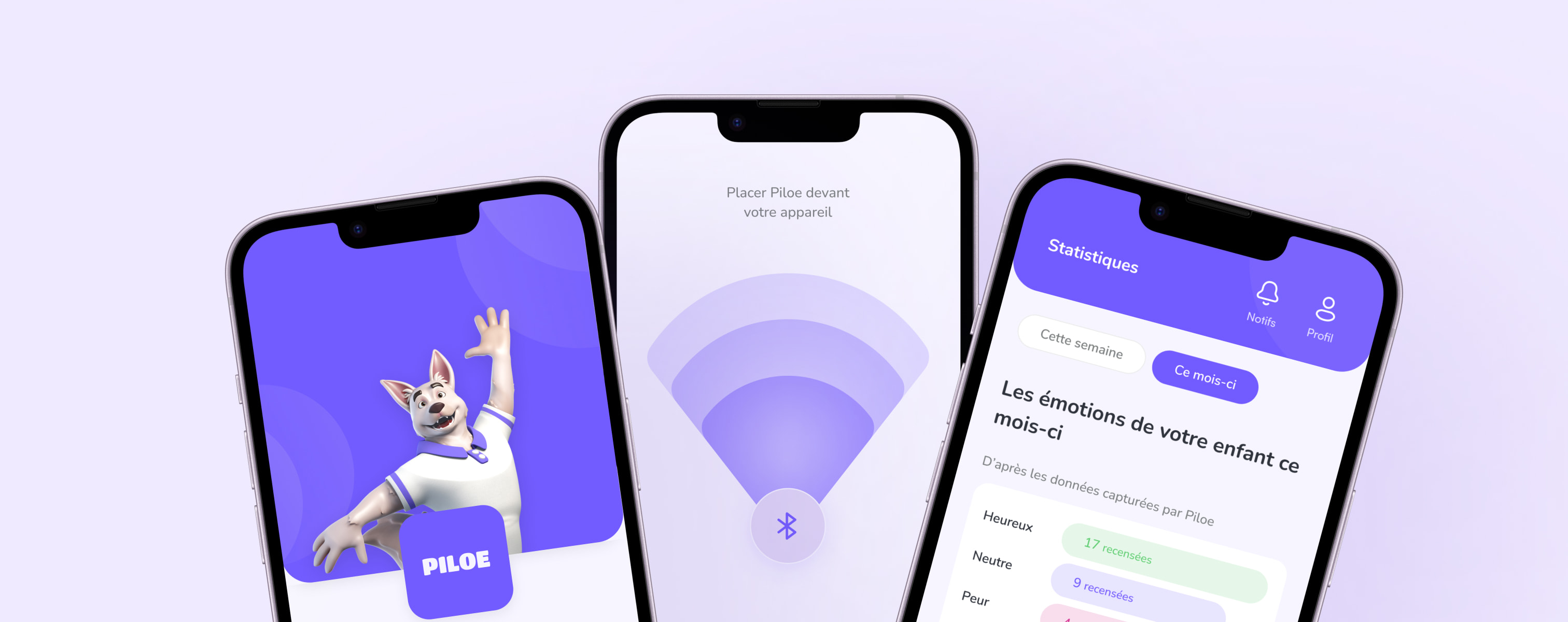
Building on the physical object, the PILOE app was designed to become a central tool for parents supporting autistic children in their daily lives.
Parents lack a single, dedicated space to track emotional data, medical appointments, and daily notes without mixing them with personal or professional tools.
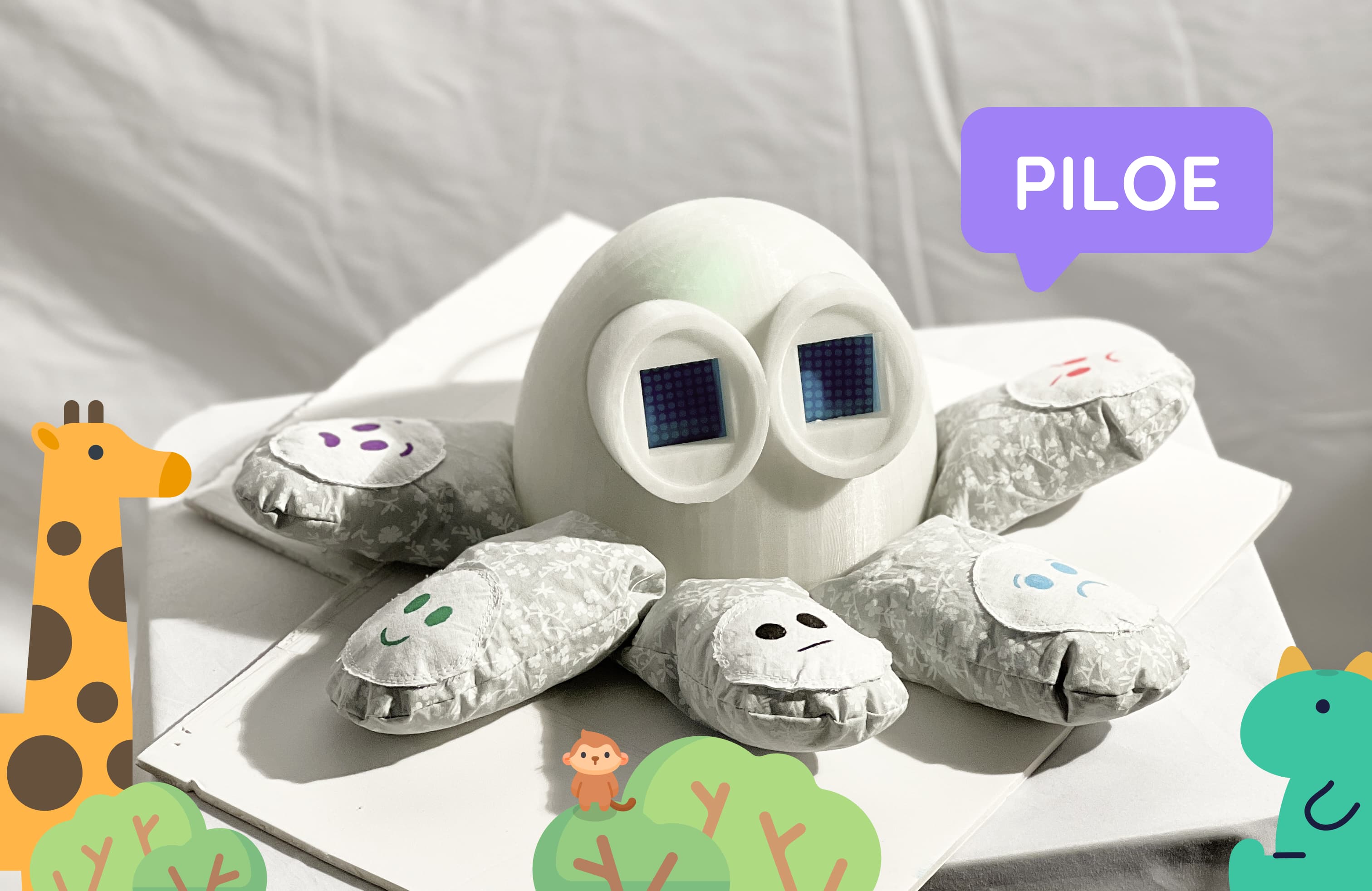
The app was designed to collect emotional signals from the object, contextualize them with notes, and provide an agenda dedicated to medical and daily appointments. The goal was to support long-term understanding, without interfering with parents’ personal or professional tools.
I worked on feature definition, information architecture and wireframes. With more time, the full system (object + app) could have been tested with families interviewed during the research phase, to validate the product at scale.
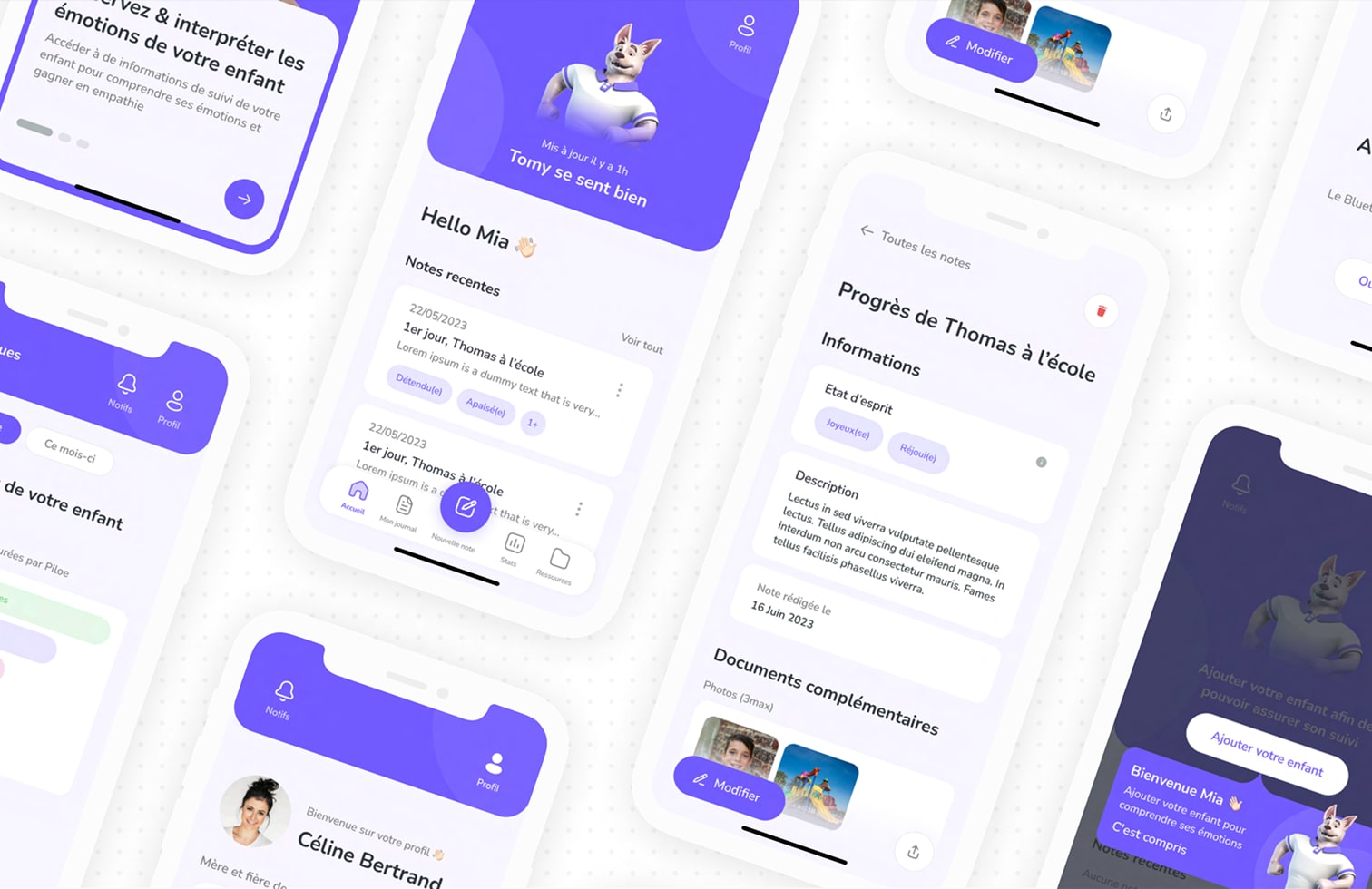
After exploring the daily challenges of children with Autism Spectrum Disorder (ASD) and their caregivers, our team began this project by designing a connected object that helps children express their emotions in a simple, non-verbal and comforting way.
But once the first prototype was functional, a new question emerged naturally:
If the physical toy helps children express, how can we help caregivers understand?
The next step of the project became clear:
→ Designing a complementary experience for parents, one that transforms children’s emotional expressions into meaningful insights caregivers can rely on.
To understand how parents navigate daily life with a child on the spectrum, we interviewed four mothers who shared, with honesty and vulnerability, how they discovered the diagnosis, what they felt, and how they live with it today.
Their stories revealed recurring challenges:
Balancing a job, household responsibilities, and the specific needs of a child with ASD quickly leads to burnout.
Many parents also carry deep guilt, wondering if they caused their child’s challenges or could have done “better.”
They dig through forums, social media, and online resources to find answers.
Meanwhile, access to professionals varies drastically depending on the region.
3 out of 4 mothers mentioned that schools lack special needs assistants, despite how essential they are for their children.
3 out of 4 mothers had quit their jobs to care for their child full-time.
Their daily schedule revolves around medical appointments, therapies, and school coordination.
Nobody can prepare you to care for a child with disability, and there is no manual to it. Caregivers learn day by day, through observation, trial, error, and love. But sometimes, they still feel like they lack the tools to make that learning clearer and lighter.
When communication is limited, parents must “decode” behaviors and guess emotions.
This becomes exhausting over time.
Parents must remain alert 24/7, on top of handling daily responsibilities.
Their child’s wellbeing becomes their entire world, and it takes a toll on them.
They try different therapies, institutions, specialists… hoping something works.
But advice is contradictory, resources are scattered, and nothing is centralized.
In many families, the mother feels more responsible and becomes the primary caregiver.
The other parent can feel disconnected, unsure how to help, or left behind.
The physical object helped children express, but caregivers needed a companion that helped them interpret, organize, and act.
So an app became the natural continuation of the project : a daily tool designed for overwhelmed parents, built to reduce mental load and bring structure to chaos.
To translate their struggles into concrete opportunities, we followed a user-centered process:
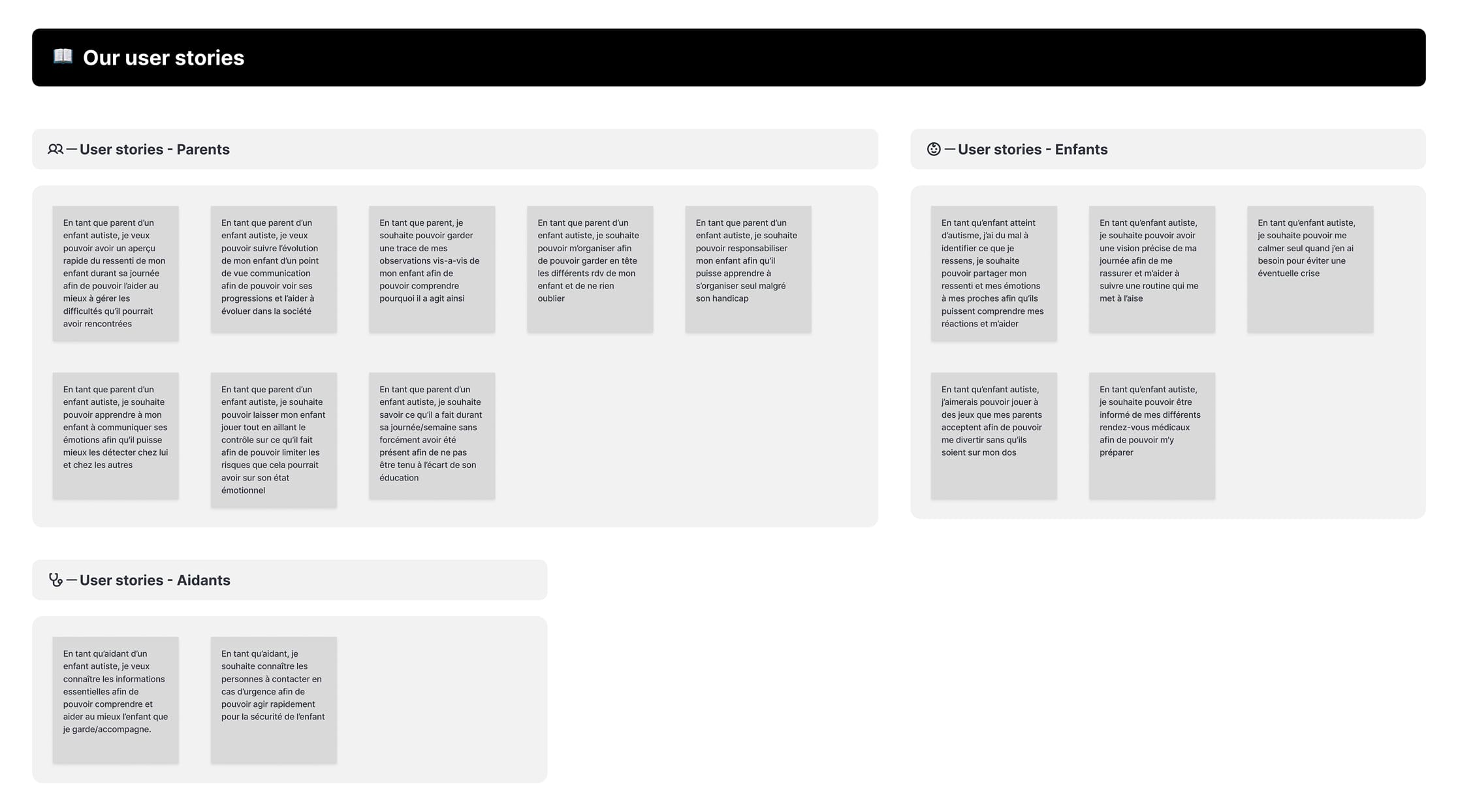
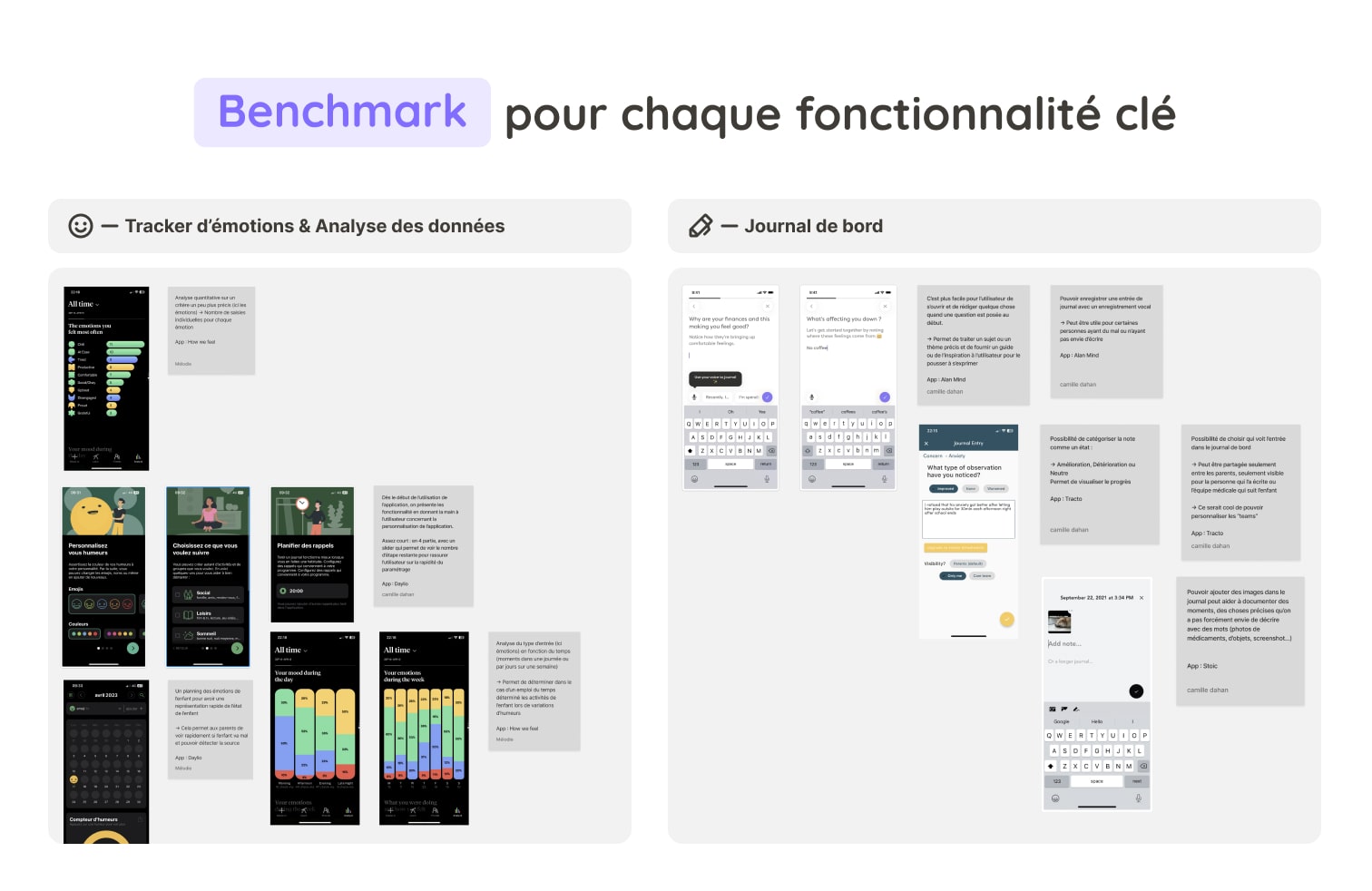
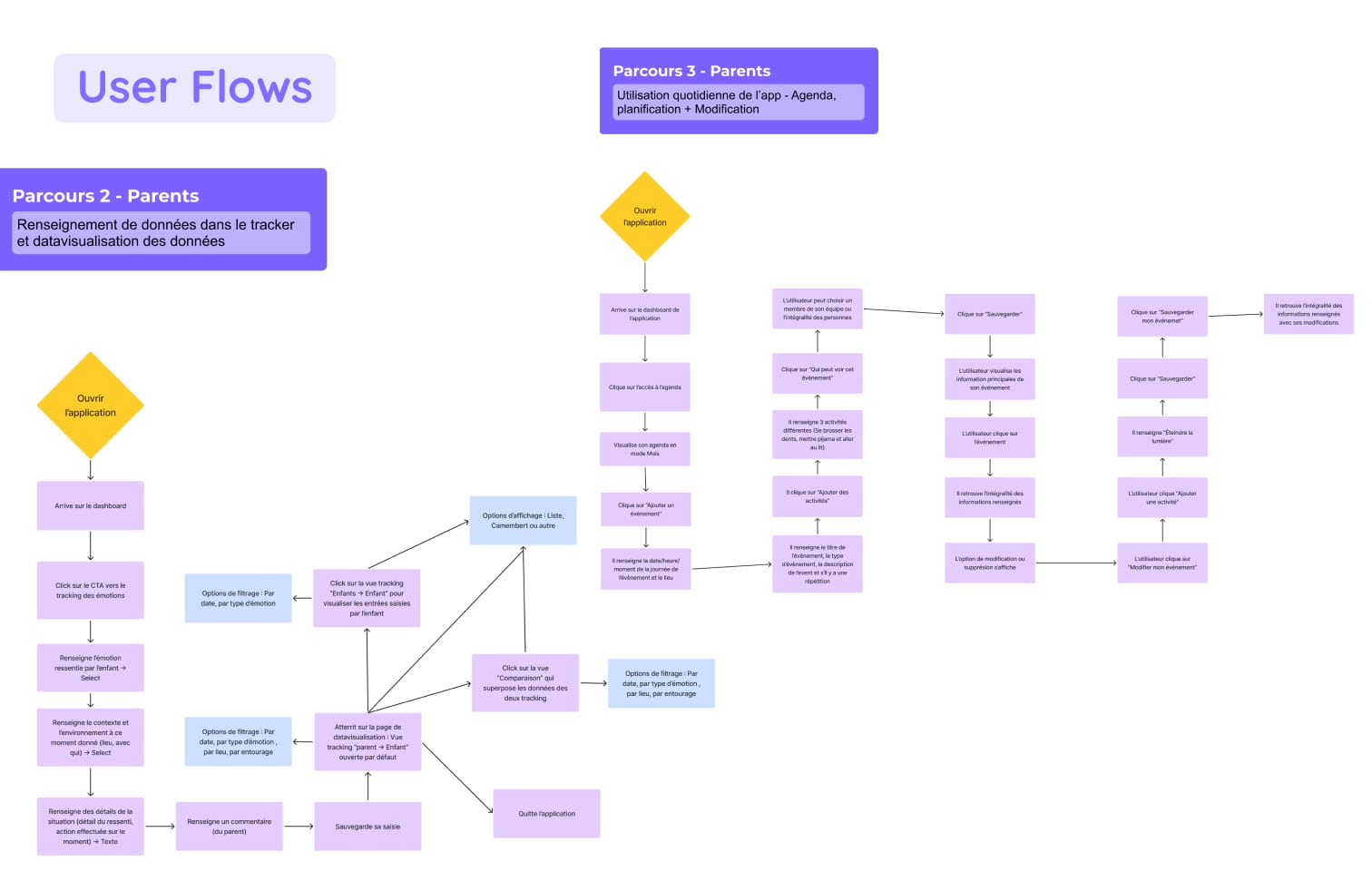
This allowed us to identify the core pillars our app had to address.
From there, we defined the core features of the app:
This digital companion would become the missing half of the product: a place where expression meets understanding.
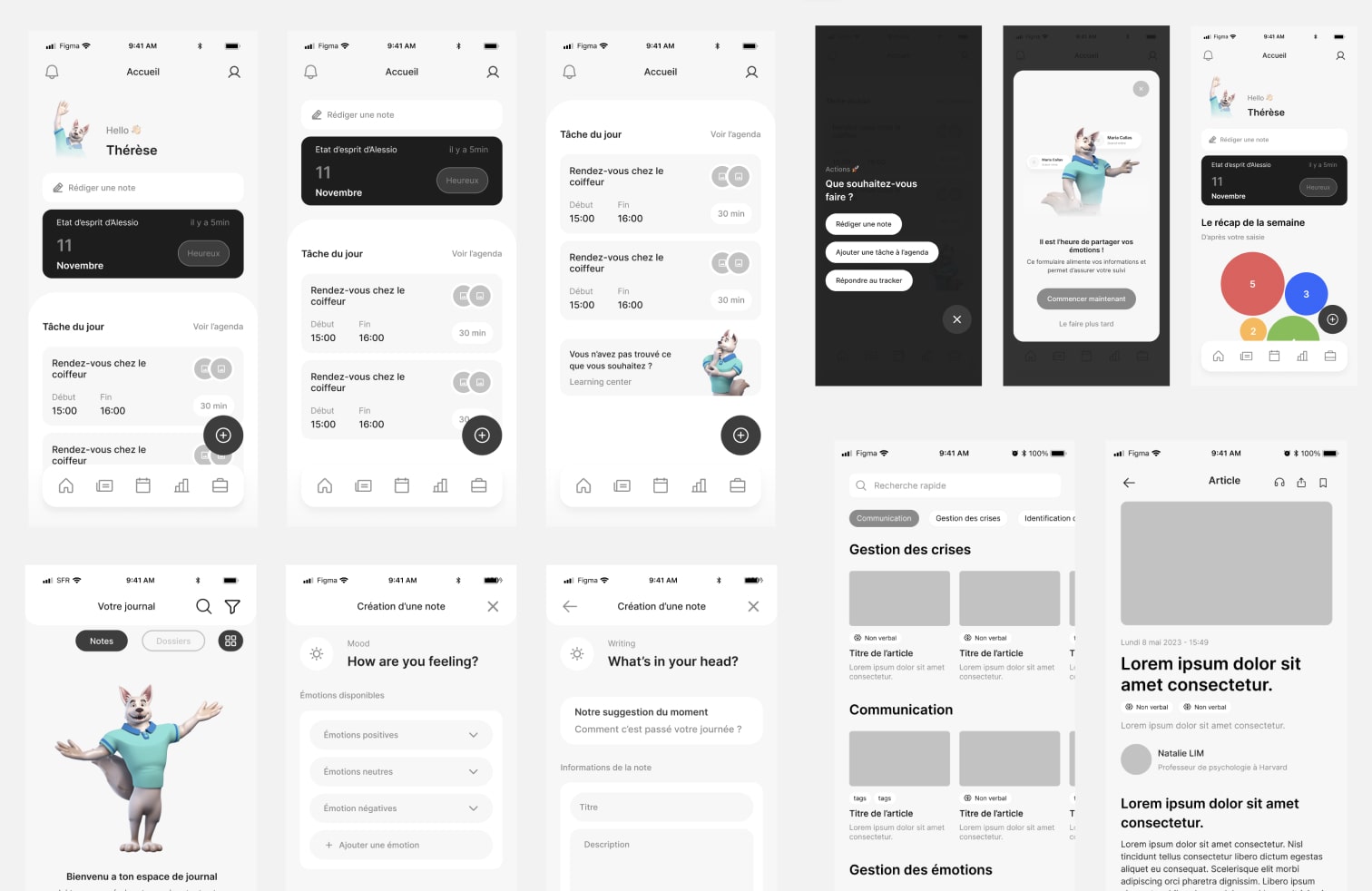
Instead of guessing how their child feels, caregivers can finally see emotional patterns unfold.
Connected to the physical object, the emotion tracker gives parents:
It turns emotion into information, and information into understanding.
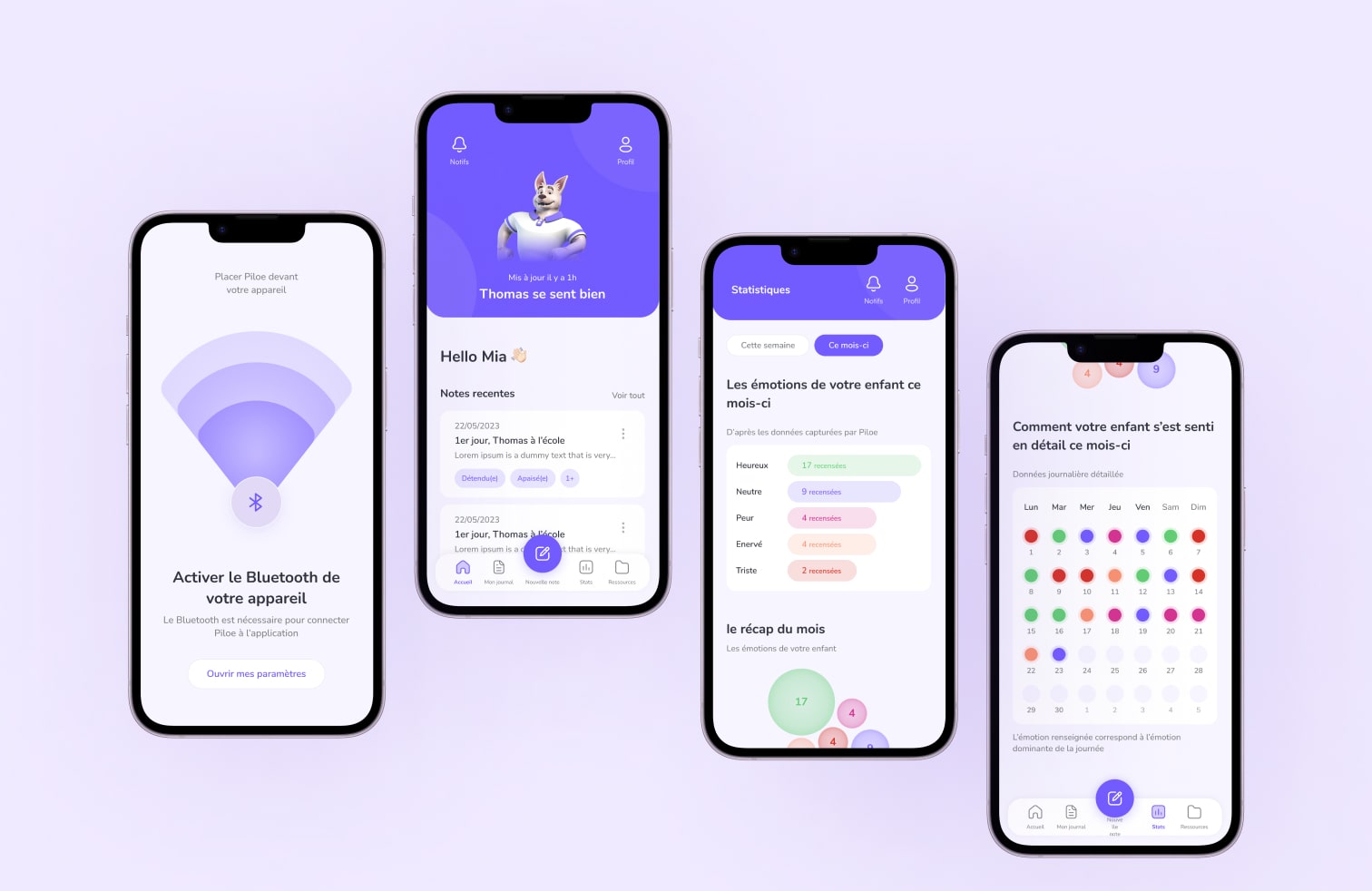
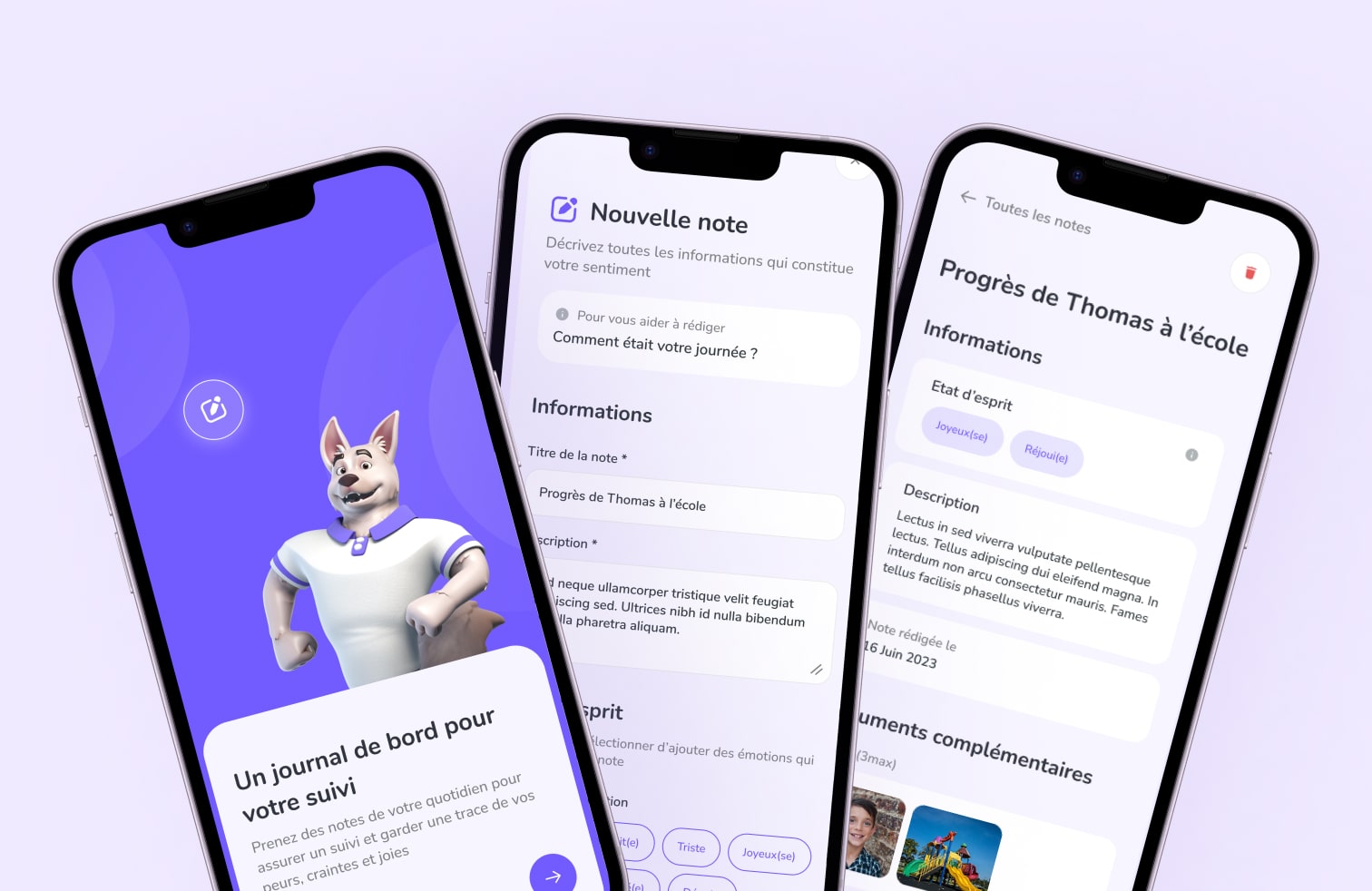
Parents of autistic children often notice tiny details that reveal so much: A change in routine, a gesture, a trigger, a breakthrough.
But these details get lost when everything happens at once.
The journal helps caregivers:
By combining recorded emotions + parental notes, the app helps reveal patterns that were previously invisible.
One of the biggest emotional loads for caregivers is managing the never-ending list of medical appointments, evaluations, therapies, school meetings, and administrative deadlines.
Typical calendars mix personal, professional, and medical life, but for parents of autistic children, these worlds do not blend well.
So we designed an agenda that is built just for the child, where nothing gets lost or buried.
Caregivers can:
It becomes a reliable companion to manage the invisible work, the part no one sees, yet shapes a child’s daily progress.
Caregivers spend hours searching online, navigating conflicting advice, outdated forums, and endless posts.
The resource hub offers:
It’s a place to breathe, learn, and feel less alone.
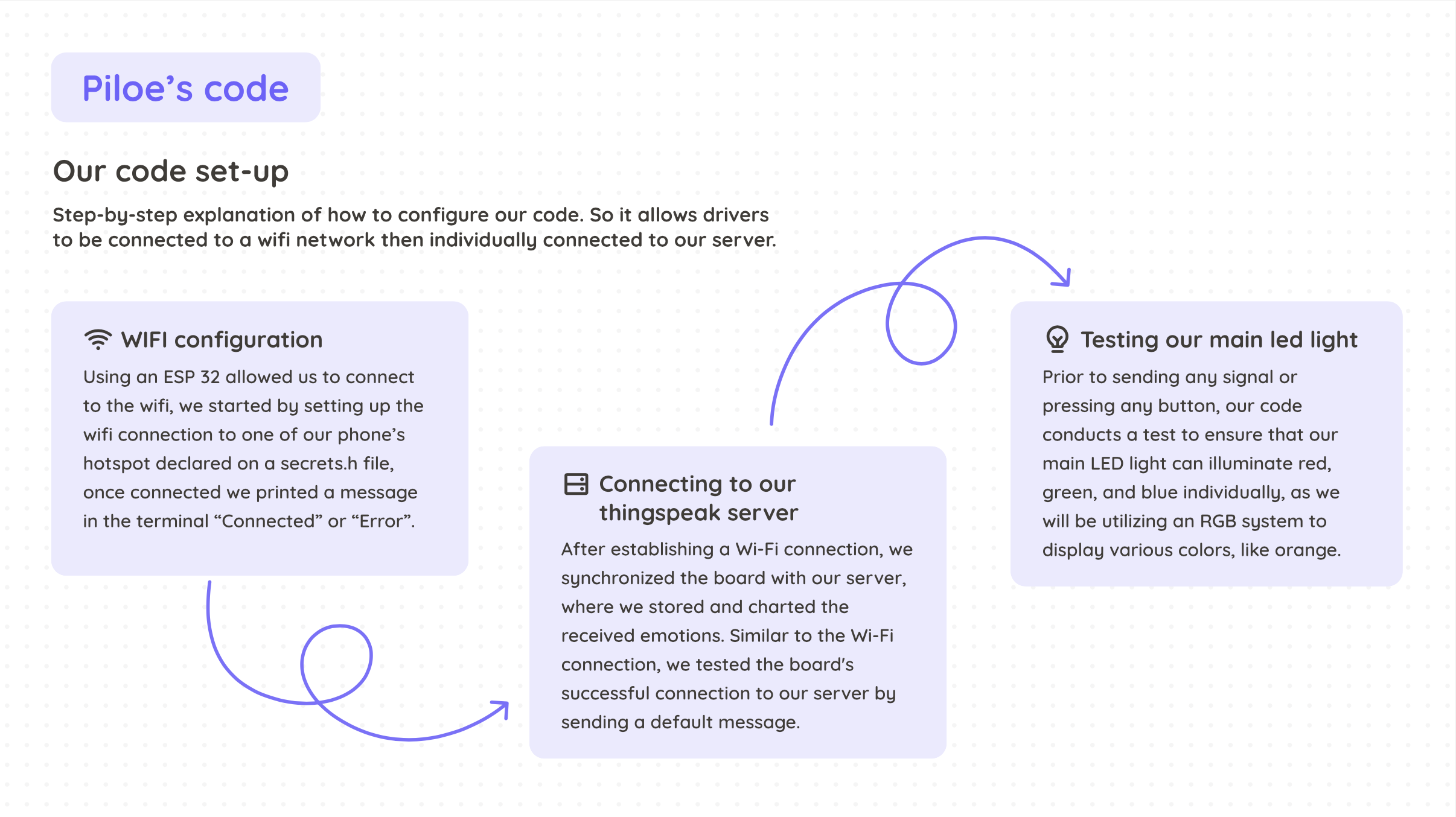
After building both the physical object and the foundation of the app, our next step was to explore how the two could communicate seamlessly.
We began testing Wifi signal transmission from the octopus to the app, allowing each tentacle press to be recognized as a specific emotion.
During this phase, we successfully captured and transmitted signals for two emotions, validating the technical feasibility of creating a fully connected emotional tracking system.
If we had more time to fully develop the Wifi tracking system and complete the application prototype, the next natural step would have been to bring the project back to the people who inspired it in the first place.
Once a fully functional version of the toy and app was ready, we could have organized user testing sessions with the parents we interviewed during our exploratory research.
This would have allowed us to:
Testing the product with real families would not only have strengthened the solution but also ensured that the design genuinely supported the caregivers’ needs, reduced their mental load, and brought more clarity to their day-to-day decision-making.
These next steps would have been essential to move the project from a promising prototype to a fully validated, human-centered tool ready for real-world use.
Today, the project continues to live on: it is showcased during the school’s open house events , illustrating to future students that UX design extends far beyond screens.
It demonstrates how thoughtful design can merge physical interactions, connected technologies, and user-centered thinking to create solutions that truly make a difference.
This project was one of the most formative experiences of my Master’s program. It pushed me far beyond designing interfaces and into a more holistic, human-centered approach to problem solving.
I learned how to conduct an exploratory research process from the ground up, from planning interviews to speaking with caregivers, experts, and families, and then transforming raw, emotional stories into structured insights.
This work taught me how to analyze qualitative data, identify patterns, challenge my assumptions, and translate user needs into concrete, meaningful design opportunities.
I also learned how to turn these insights into real, testable solutions. From early ideation to building functional prototypes, both physical and digital : I gained confidence in navigating ambiguity, iterating quickly, and grounding every design choice in evidence.
Another major learning was project management. Coordinating a multidisciplinary team, planning our milestones, testing technical constraints, and presenting our progress to stakeholders helped me develop a more structured, efficient way of working.
I learned how to prioritize, how to stay aligned as a team, and how to maintain a clear product vision even when exploring complex and sensitive topics.
In the end, this project strengthened not only my design skills, but also my ability to communicate, collaborate, and lead a project that carries real emotional and social impact.