InstantMeal is a mobile app concept designed during Luni’s 5-day Design Contest, exploring how food innovation could better serve busy, health-conscious people.
The challenge was simple but demanding:
Design a fast, flexible, and delightful way to create, save, and order personalized meal cubes, even when things don’t go as planned.
Through this project, I focused on a very real friction: what happens when your go-to meal is out of stock, and you don’t have time to think?
Instead of seeing this moment as a failure, I treated it as an opportunity to turn frustration into discovery.
My role covered the full product thinking process: understanding user constraints, defining a clear problem statement, designing user flows, crafting key features, and translating them into a cohesive mobile experience : from UX to UI and branding.
The result was a realistic, user-centered concept that won 1st place at the Luni Design Contest, praised for its clarity, feasibility, and relevance to everyday life.
Luni is a French design studio based in Bordeaux, known for creating joyful and useful mobile apps for the US market. Their ambition is to craft experiences that bring utility, creativity, and delight into people’s everyday lives, all while giving their designers the freedom to explore bold ideas.
In early 2025, Luni launched their first Design Contest for young designers to challenge themselves and showcase their creativity.
I applied and got in!
Five days, one brief, one goal: create a complete mobile experience around food innovation.
Design a mobile app allowing users to easily create, save, and order their own meal cubes, ensuring the experience remains quick, flexible, and delightful for busy people.
For our target users : active professionals and health-conscious individuals, time and energy are the most valuable resources.
In short, these users want:
Speed, convenience, personalization, and trust, without cognitive overload.
InstantMeal offers a limited selection of meal cube recipes, but their popularity often leads to certain options running out at pickup stations. When this happens, users are left disappointed and unsure of what to choose next, especially when they’re short on time.
Busy users don’t want to browse endlessly. If their favorite meal is gone, they don’t have time (or patience) to scroll through dozens of alternatives.
This friction risks leading to drop-offs and loss of trust in the product.
When people are rushed, every decision feels heavier.
Asking them to “figure out what they want next” only adds mental fatigue, making the product feel like another task, not a solution.
How can we help busy people find and order a meal that matches their taste as fast as possible ?
In short, what the app needed to encompass are the following points :
To guide my design process, I took Léa’s example, a 29-year-old marketing consultant rushing through Bordeaux train station.
She has 15 minutes before her train. Her favorite combo is out of stock.
Instead of feeling disappointed, she opens InstantMeal and discovers a new, suggested combination that matches her preferences, and it has to be ready before her train leaves.
The goal was to turn frustration into discovery and make every interaction feel rewarding, even in moments of constraint.
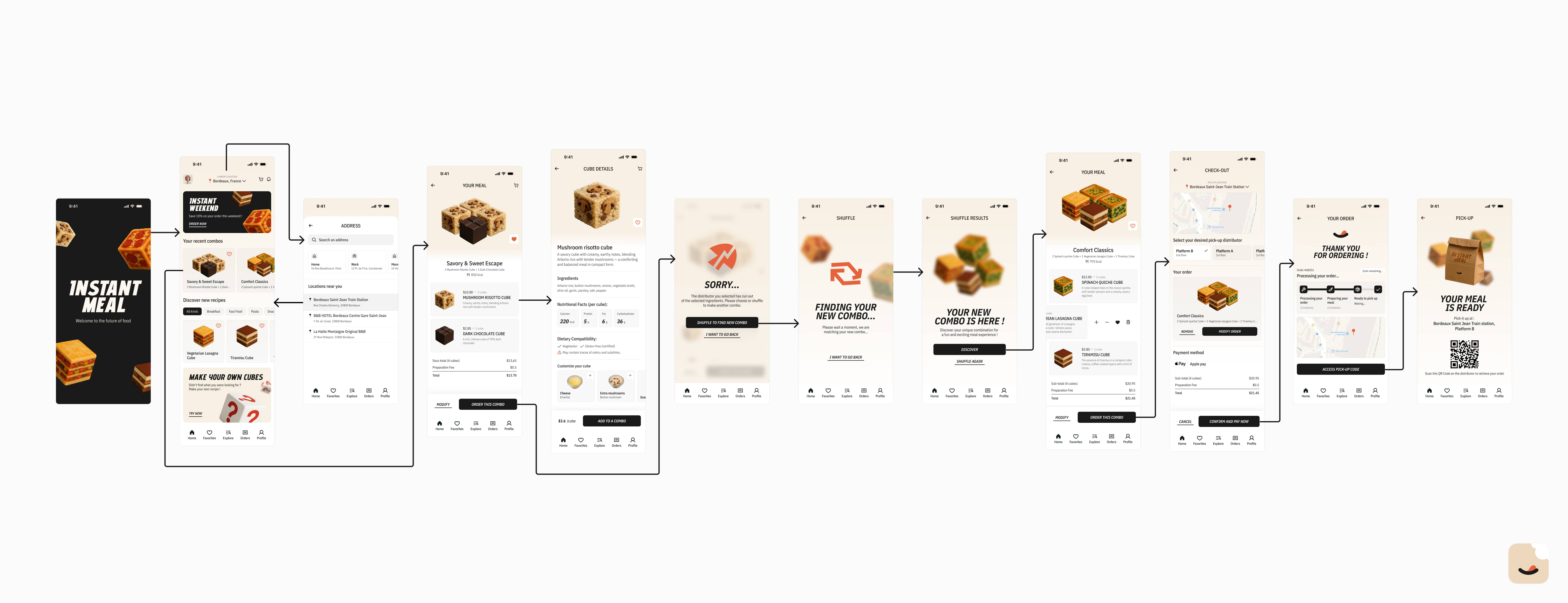
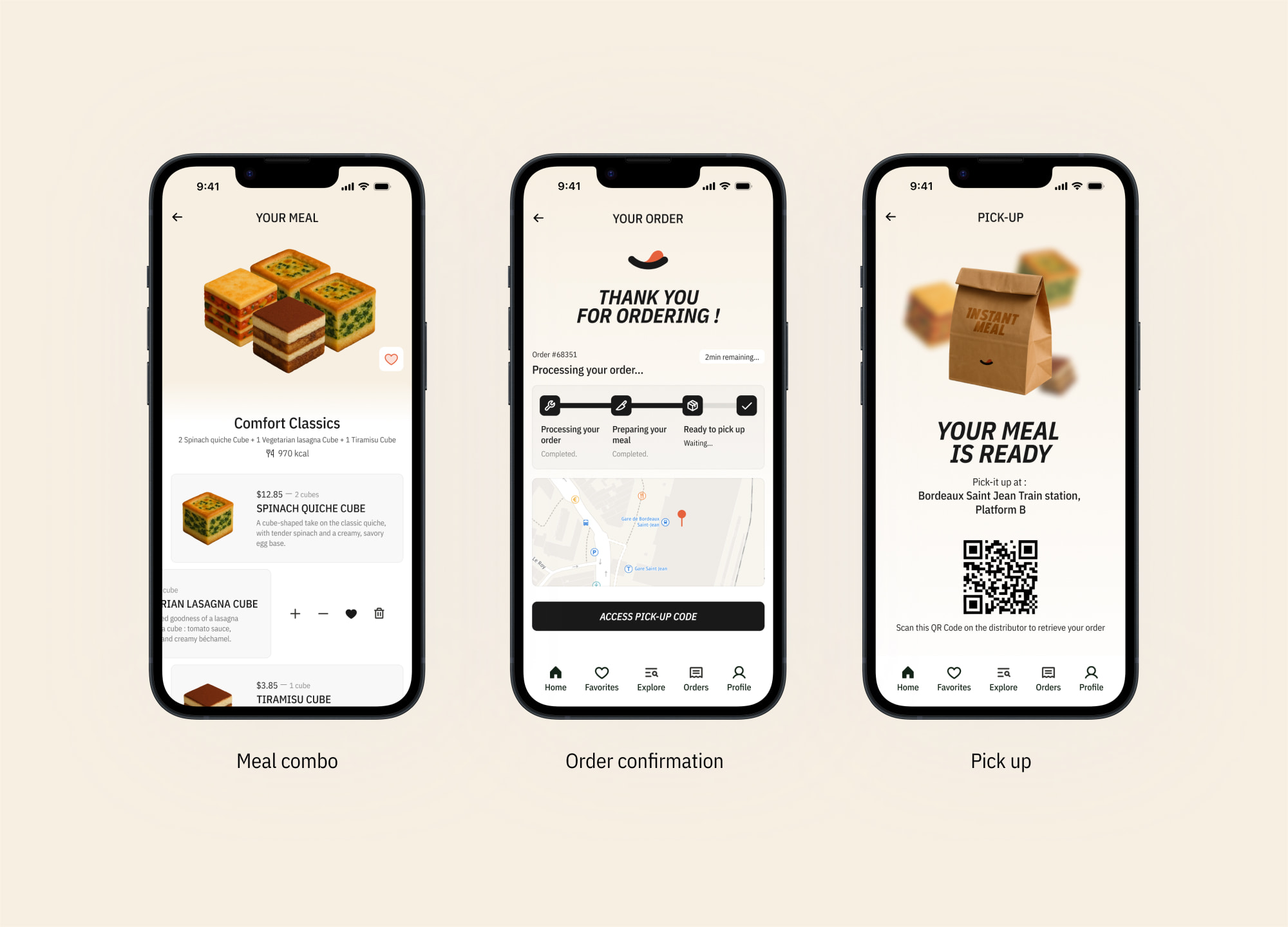
I then created high-fidelity mockups illustrating the user journey previously described, showcasing the app’s key features:
The brand identity aimed to reflect speed, delight, and simplicity.
→ A clean, friendly look that makes the app feel like a companion, not a tool.
Users can create, save, and re-order personalized sets of cubes.
The design focuses on speed and familiarity, with easy access from the homepage, so users can reorder in just a few taps.
→ Saves time, reduces friction, and builds routine through favorites.
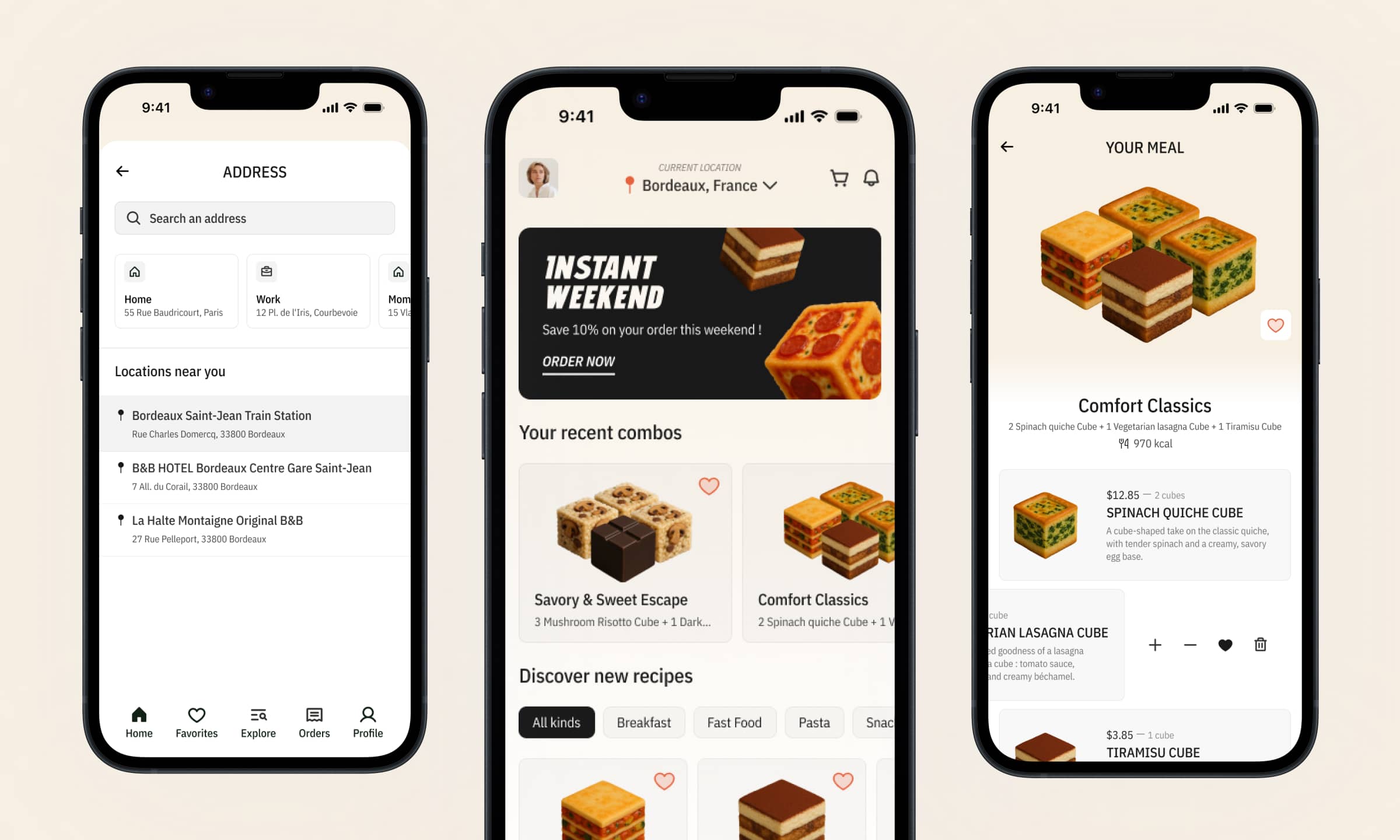
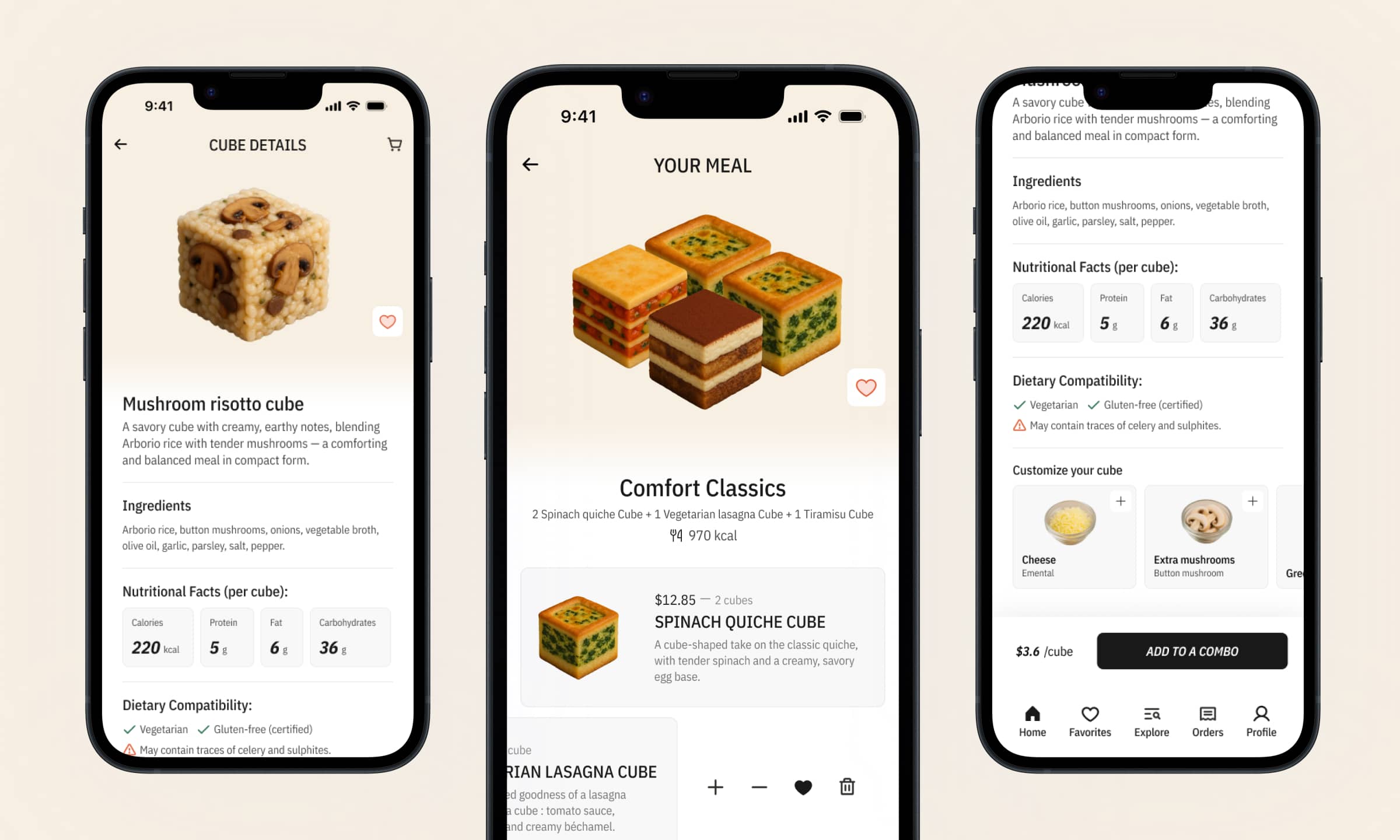
Each cube has its own product page with all the essentials: price, ingredients, nutritional values, dietary info, and compatibility (vegan, gluten-free, etc.).
Users can add small extras or save cubes for later, offering flexibility without clutter.
→ Encourages trust and control without overwhelming the user.
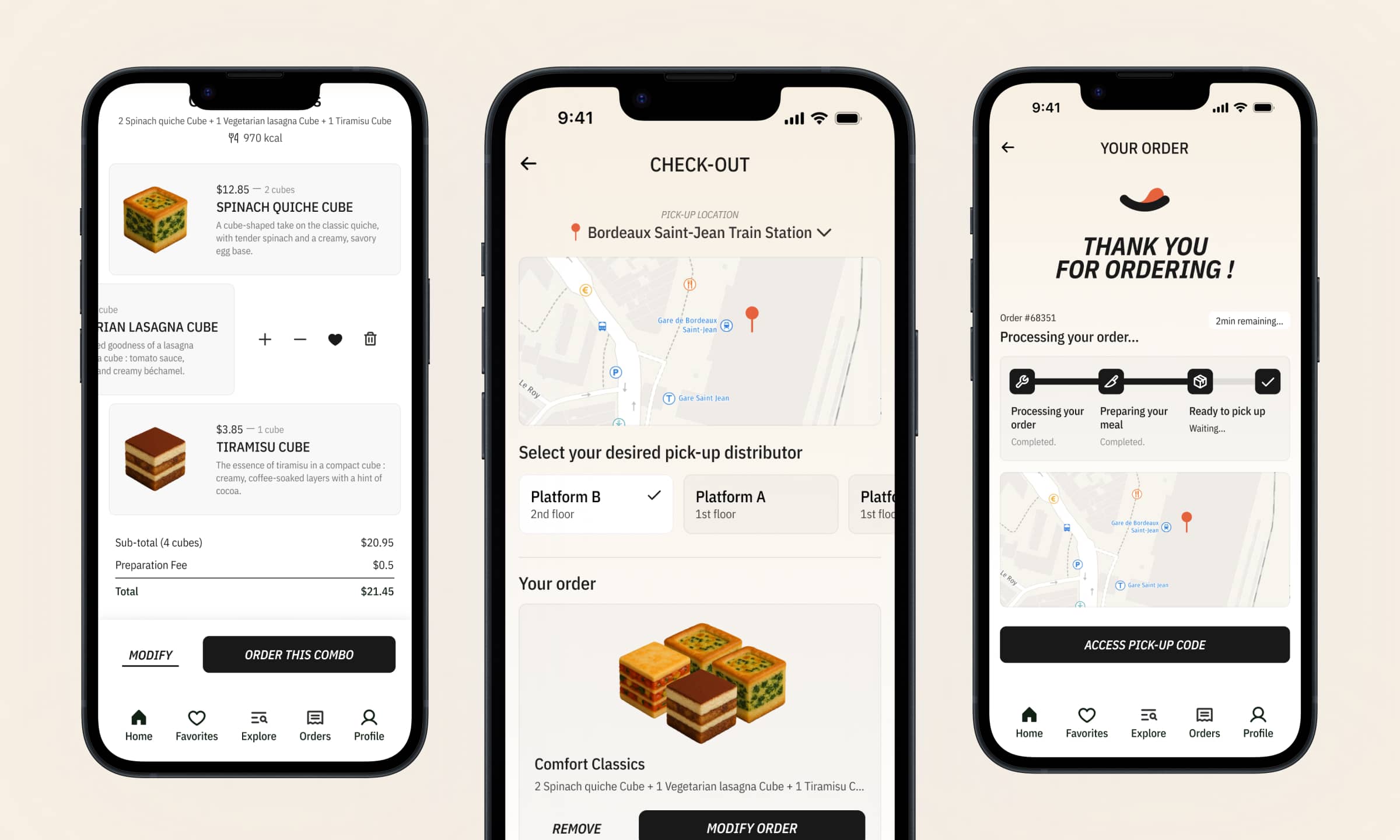
Users are geo-localized on entry and can choose a pickup point or delivery.
They can track their order step by step, ensuring a smooth and predictable experience.
→ Minimizes uncertainty and steps, enhances trust.
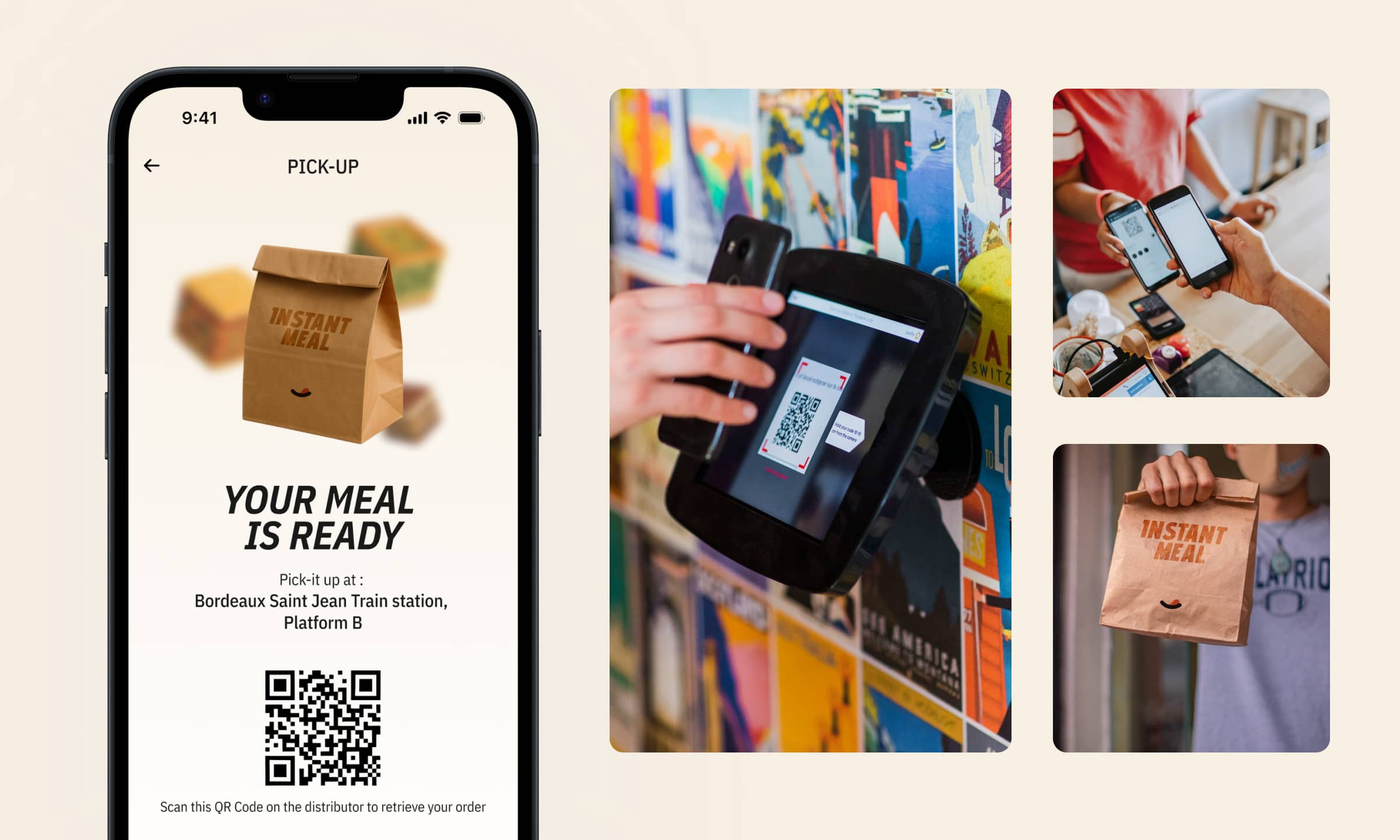
After checkout, users receive a QR code to scan at the pickup station or to show to the delivery man.
No waiting lines, no confusion : just scan, grab, and go.
→ Reinforces the brand’s promise of speed and convenience.
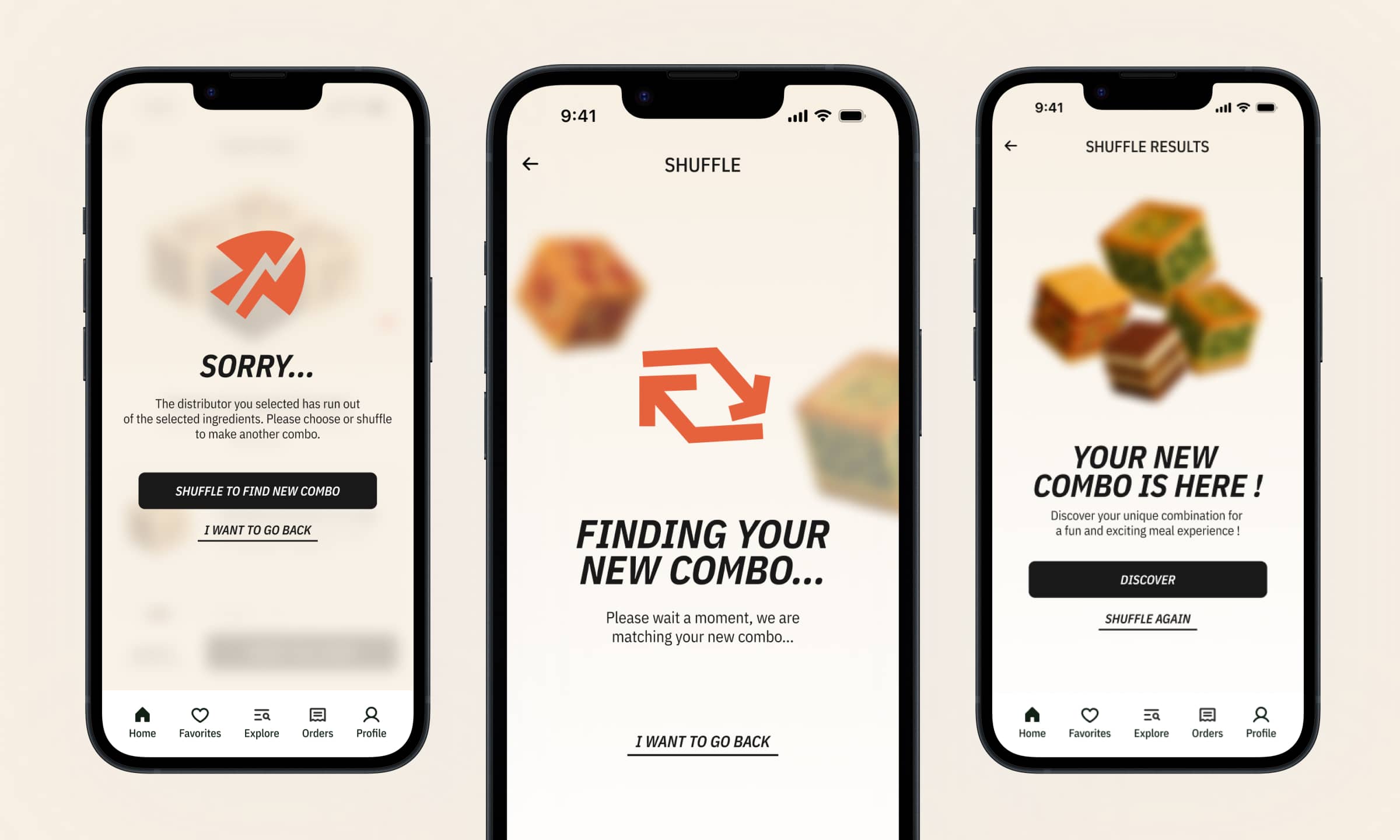
The Shuffle Mode was my way to transform a recurring frustration, out-of-stock meals, into a moment of play and curiosity.
By tapping “Shuffle,” users can generate unique, AI-powered meal combinations based on their past preferences and dietary choices.
It’s quick, playful, and gives a sense of surprise, without adding mental load.
This small feature was designed to spark excitement, encourage discovery, and rebuild trust when the unexpected happens.
My concept was selected as the winning entry among all participants.
I was invited to Luni’s Bordeaux offices for the award ceremony, where I met other talented designers, mentors, and founders who shared inspiring stories about creativity and perseverance.
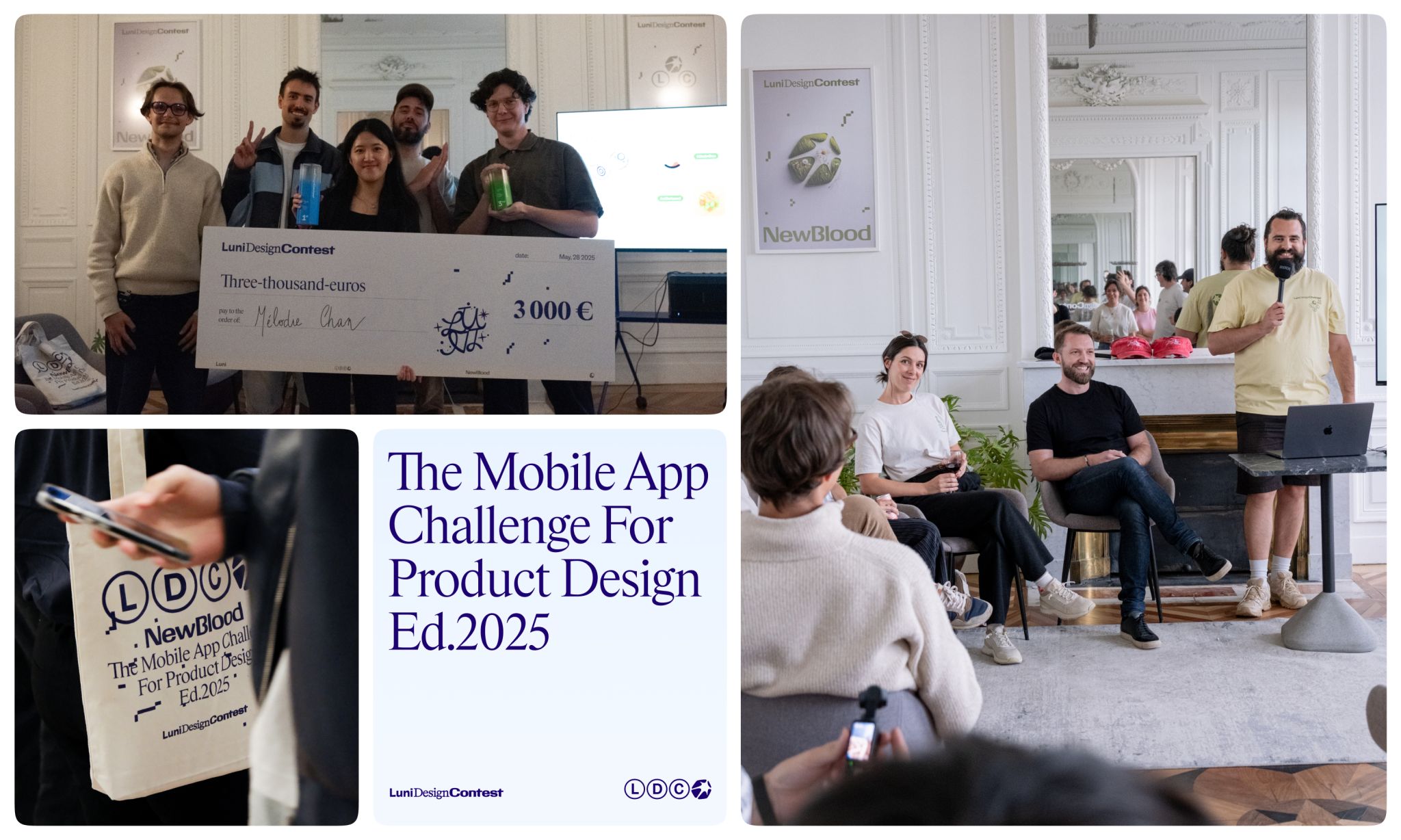
“It was the most realistic proposal, something we could actually see and use in our everyday lives.”
“Even though the concept was futuristic, the way users interact with food delivery would remain similar, and this app captured that perfectly.”
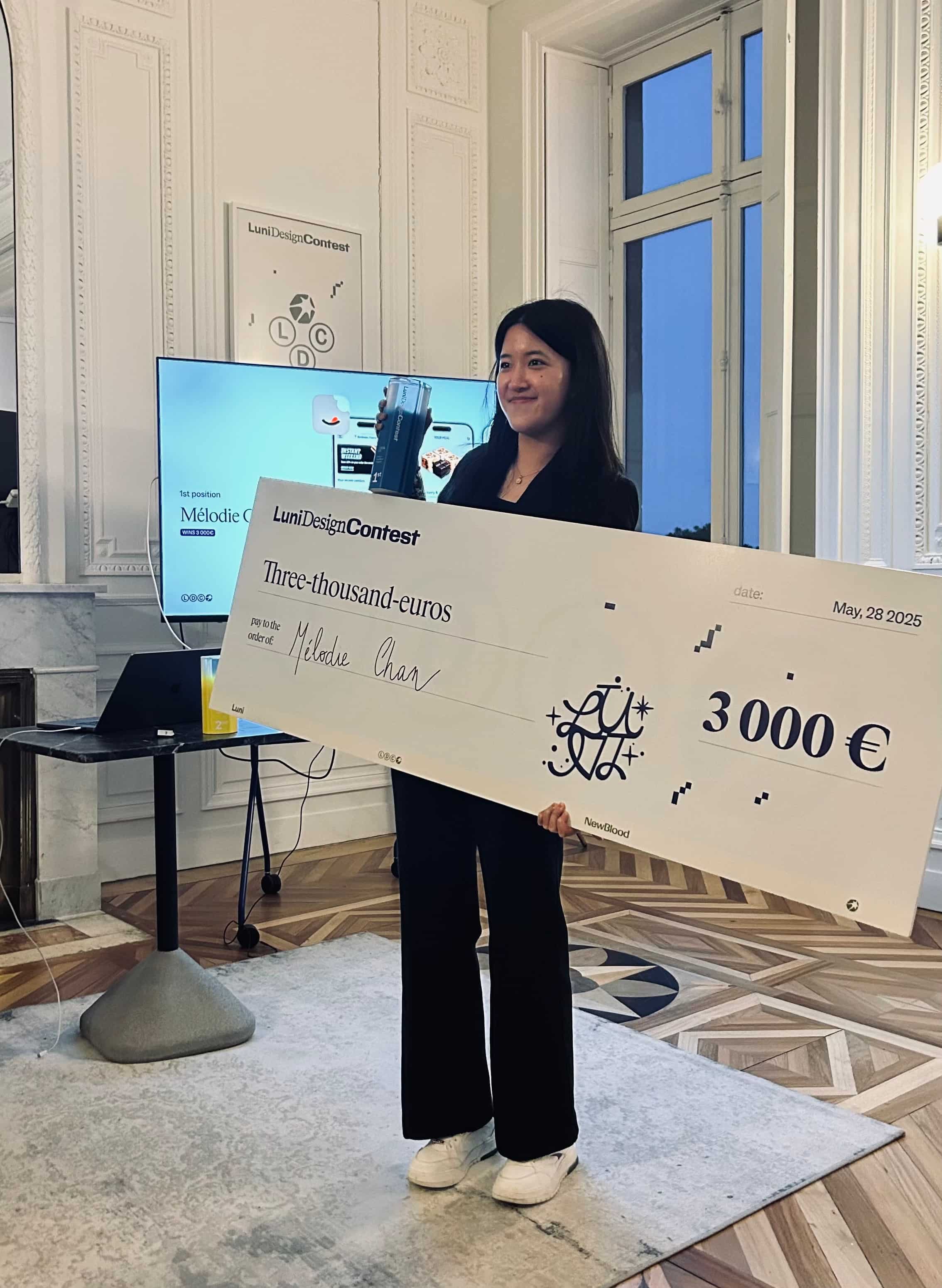
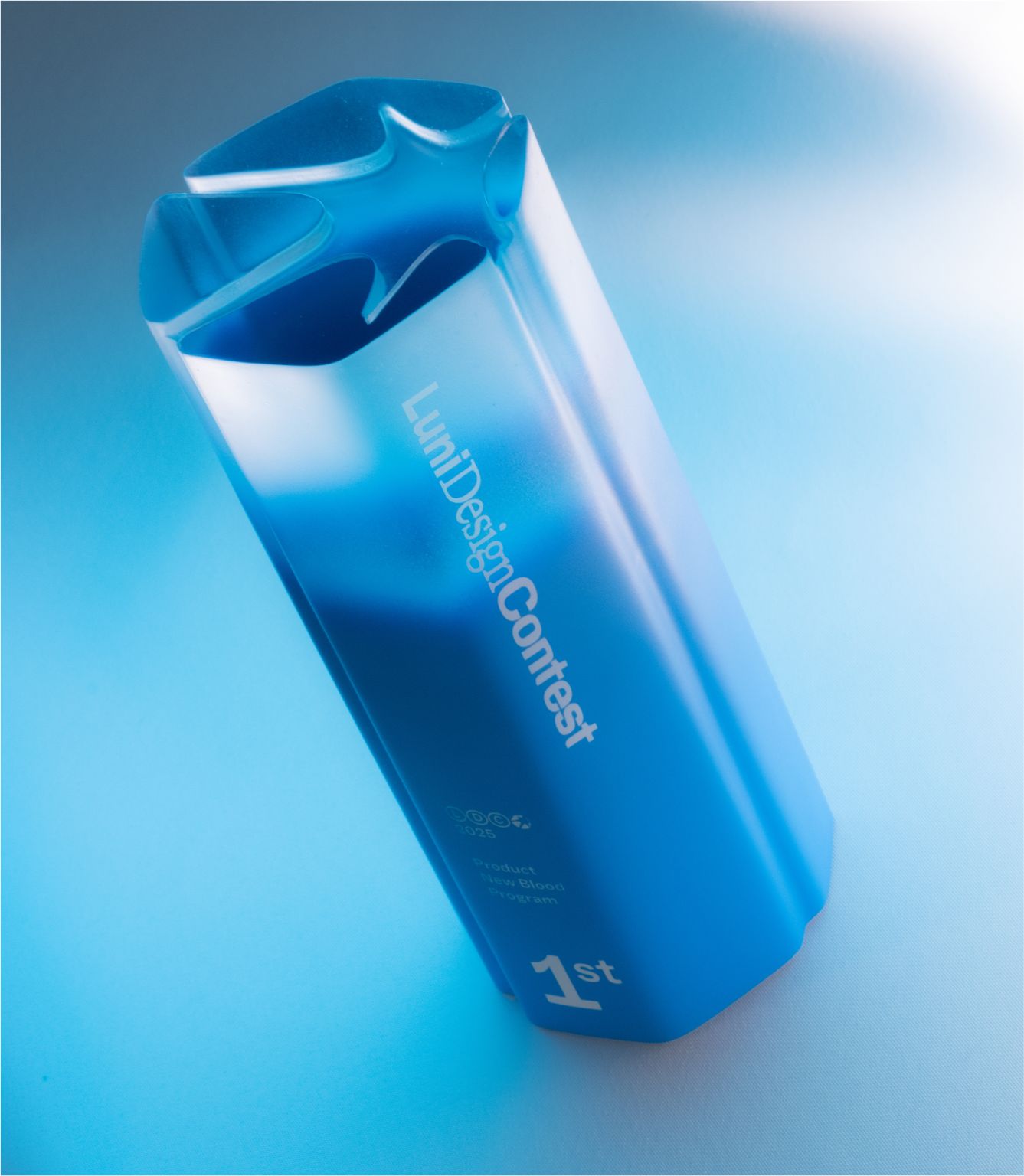
It was such a great opportunity for me because it taught me to challenge myself and get my ideas out there for people to see. It helped me gain confidence in my abilities and see how far I could go by giving it my all and I’m proud I took that leap!
Participating in this contest also reminded me why I love design, it’s about turning constraints into creativity, problems into opportunities, and moments of frustration into joy.
It wasn’t just about building an app; it was about crafting an experience people would genuinely enjoy.
And that’s what product design is all about.